
Krakow does not sit in the mountains, but on a clear morning you can leave the market square before eight and be standing under carved eaves in the Tatra foothills before eleven, in a highland world that spent the last century and a half deciding, on purpose, what a gorale should look like on paper, in wood, and on a plate. This is not a cable car ride and a shot of żubrówka bought at a roadside stall. It is the closest thing Poland has to a folk culture that wrote its own design manual and then built a town around it, and reading it properly takes a plan rather than a half-day itinerary copied from a hotel noticeboard.
For visitors based in the city (the Krakow guide covers the rest of what the region offers), the Tatras make a genuine day trip out of Zakopane, the gateway town, not a compromise squeezed between breakfast and the last bus home. What follows is a walking-and-driving route through the region's real folklore: the museums that ground the claims, the village and graveyard that show it lived, the skansen that goes past the postcard version, the cheese economy behind the funicular view, and the taverns where the music is still someone's actual trade rather than a dinner-show gimmick.
Where gorale identity was actually built
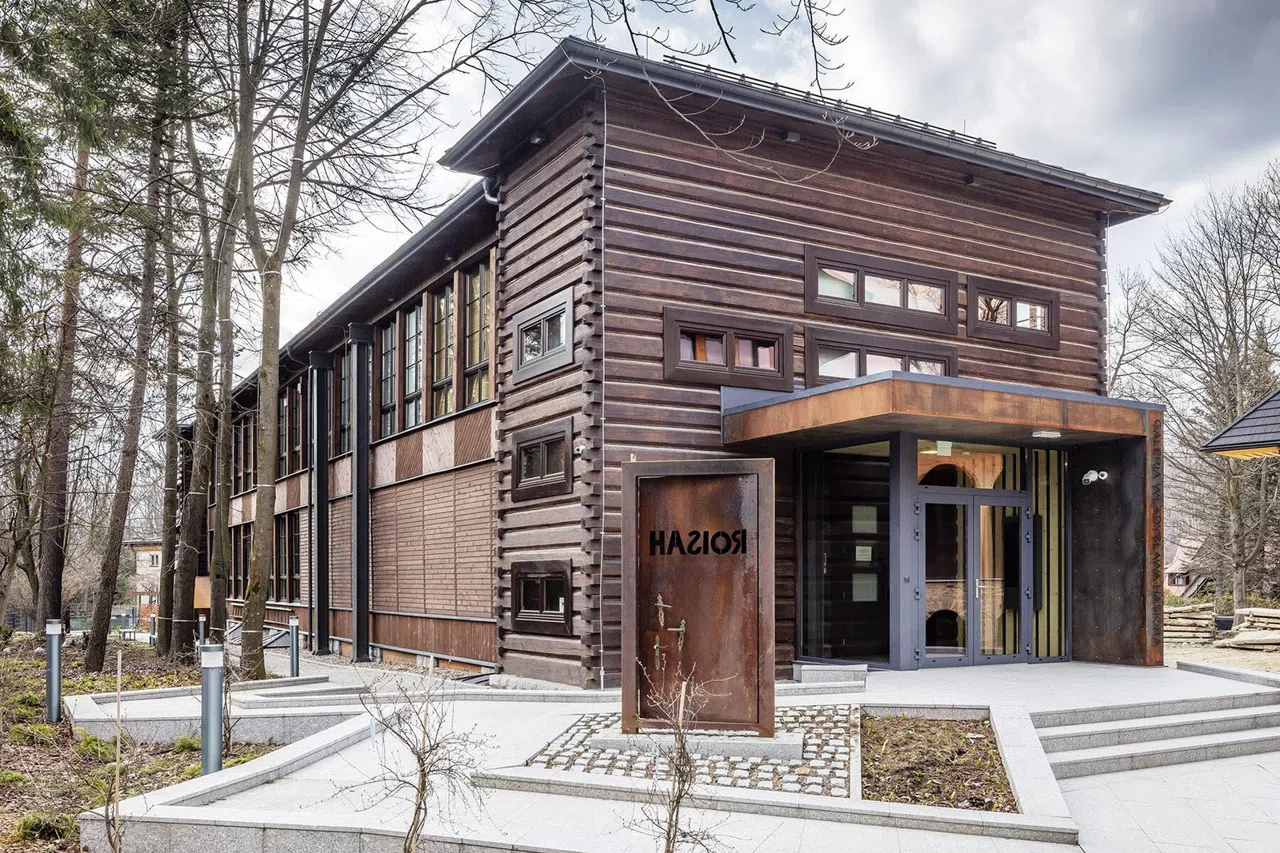
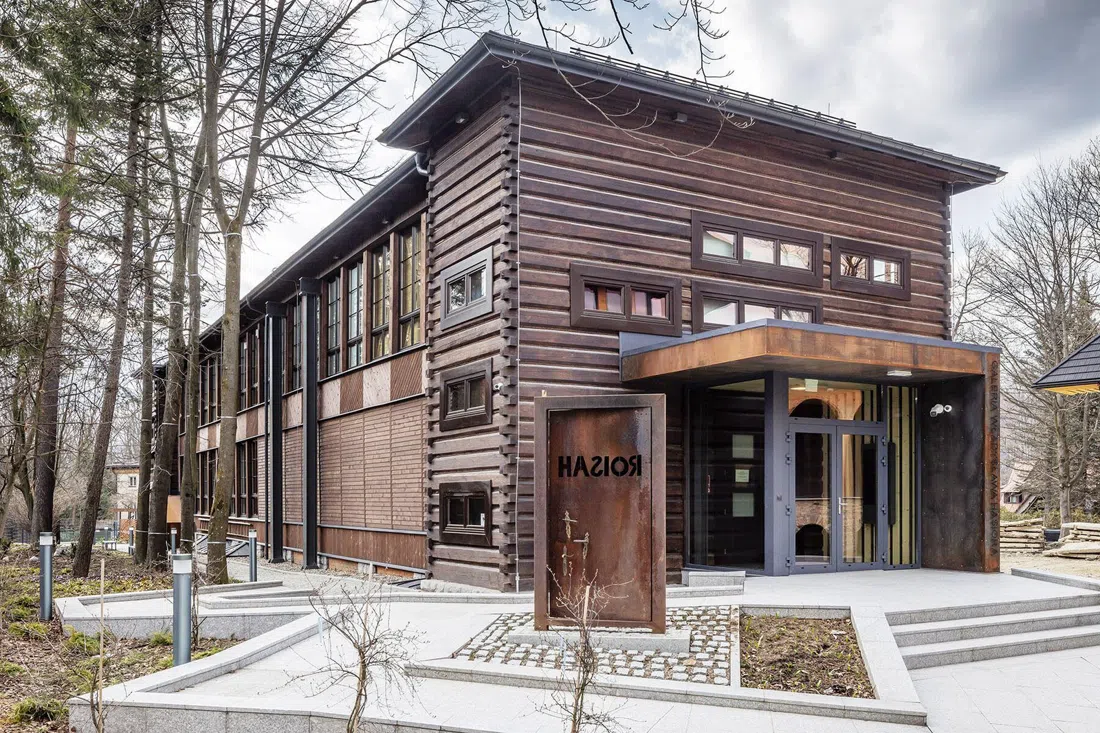
Start at the Muzeum Tatrzańskie im. dra Tytusa Chałubińskiego (Gmach Główny), the main building near Zakopane's centre, before you take anything a souvenir stall tells you about highland culture at face value. This is the scholarly anchor for gorale ethnography (a real collection of costume, tools and craft rather than a curated shop window), and it is open Wednesday to Sunday, 10:00 to 18:00, closed Monday and Tuesday, with entry running from a few zloty up to the teens. It takes booked groups with advance notice, which makes it a sound first stop for a coach party as much as for a couple with an hour to spare.
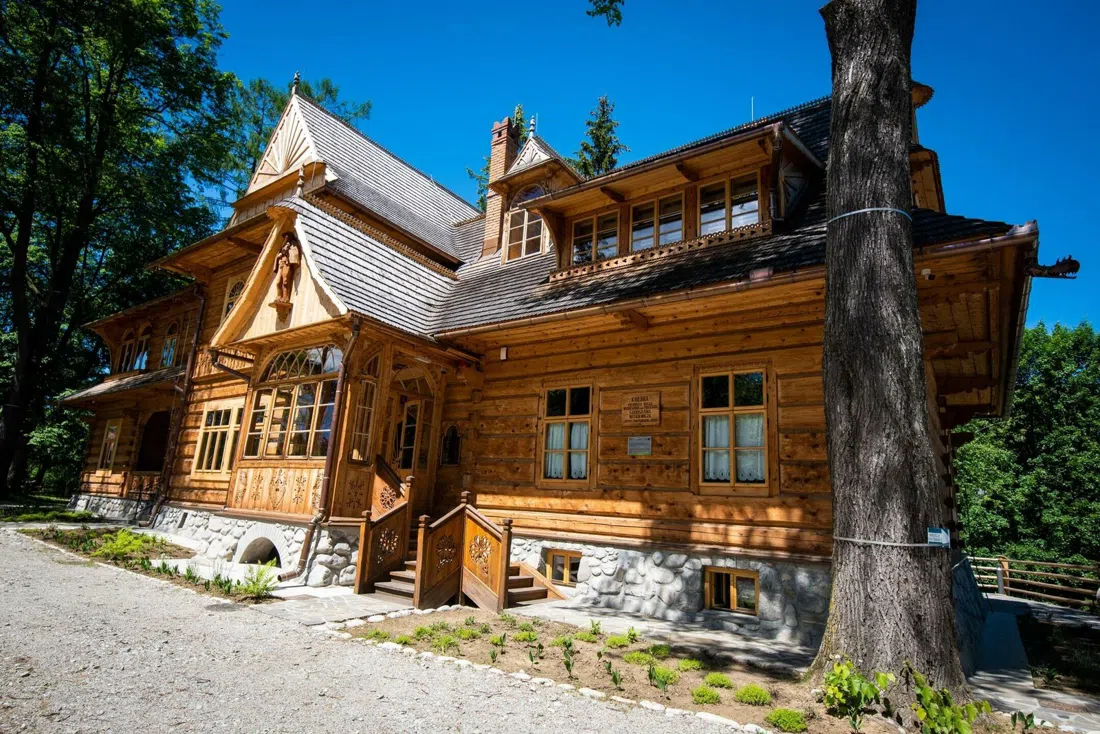
A short walk from there is Willa Koliba – Muzeum Stylu Zakopiańskiego, on the western edge of the town centre, the single best place to physically see where "gorale architecture" as a designed national style actually began. Stanisław Witkiewicz built Koliba in 1892 as a private commission, then used it as the template for what he called the Zakopane Style, a conscious fusion of highland timber-building technique with the aesthetic ambitions of a Polish national movement looking for a folk architecture to call its own. That history matters here because the five period rooms inside are narrow and the corridors tight; groups are capped at around 15, so it suits a small tour or a couple far better than a full coach, which should split into two passes rather than crowd the rooms.
The same idea, applied to a church rather than a house, is a short trip further out at Kaplica na Jaszczurówce (the Chapel of the Sacred Heart), in Jaszczurówka on the edge of town toward the Bystra valley. It is Witkiewicz's most complete sacred building, entry is free, and it can be visited self-guided by groups of any size outside Mass times. It's worth pairing directly with Koliba on the same morning, since seeing the style applied to a home and then to a chapel is what makes the design language click rather than just look decorative.
The village street and the graveyard that carved its grief in wood
An honest folklore itinerary has to leave the town centre, and the clearest way to do that is Chochołów, a UNESCO-listed wooden village a short drive west of Zakopane on the road toward the Orava border. The point of Chochołów is the street itself: a continuous run of timber homesteads that were never rebuilt in brick, which is rarer than it sounds this close to a resort town. Be honest with readers about one thing here: the Zagroda Bafiów homestead-museum branch inside the village is currently closed for conservation work, so this stop is about walking the architecture, not touring a period interior. It is entirely free and coach-accessible, and a slow twenty-minute walk down the main street does more to explain highland building technique than any panel in a museum.
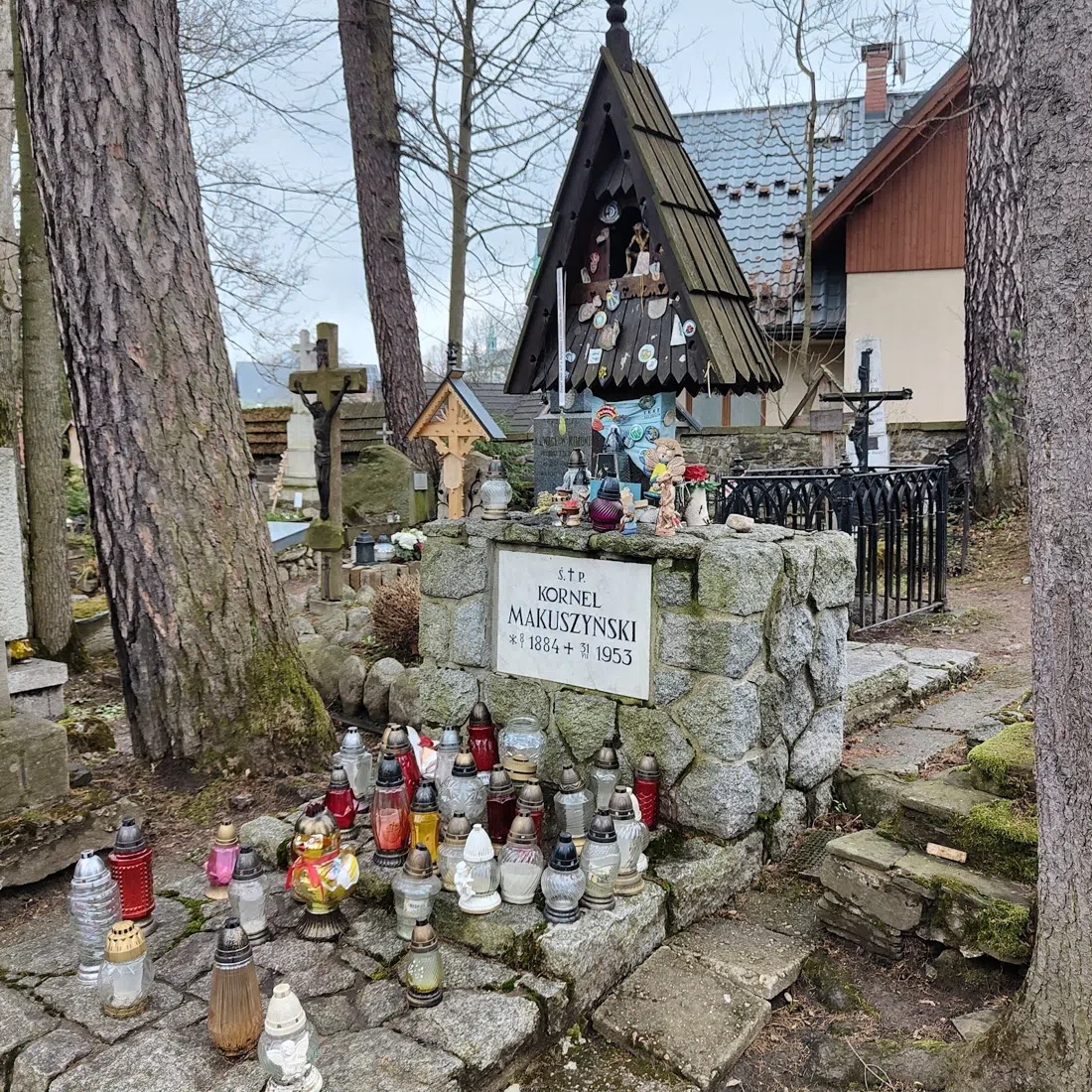
Back in town, the Stary Cmentarz na Pęksowym Brzyzku, just off the centre near the parish church, is the quietest and least obvious stop on this route, and one of the most telling. It is a working cemetery where generations of gorale families commissioned carved wooden and stone grave markers from local folk artists: identity expressed in mourning, not for tourists. It has charged a small entrance fee since 2014, is walkable by a group of any size, and asks for the same quiet etiquette any cemetery does; it is also where Tytus Chałubiński, the Warsaw physician credited with popularising Zakopane among the educated elite of the 1870s, is buried, which is a fitting place to register how deliberately this whole cultural identity was built and marketed even in his own lifetime.
The skansen that goes further than the town centre
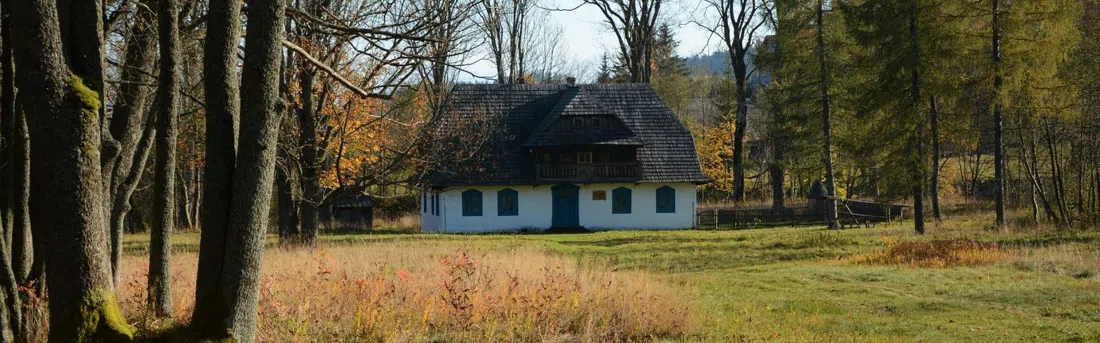
Most visitors never leave Zakopane proper, which means most visitors never see Orawski Park Etnograficzny, an open-air ethnographic museum in Zubrzyca Górna, about a 45-minute drive from town toward the Orava region on the Slovak border. It is worth being precise about what this adds: Orava is a related but distinct highland culture from Zakopane's own Podhale gorale, sharing the same highland farming economy and much of the same timber-building tradition but with its own dialect and dress variations, a distinction worth making rather than a repeat of what you have already seen in town. The skansen recreates a working highland farmstead rather than a curated single house, with guided tours running roughly PLN 15 to 30, and it handles large groups and school parties comfortably. If the day allows only one stop beyond Zakopane's immediate radius, this is the one that earns the drive: it is farming life rather than architecture on display, and it is the piece that makes the sheep-cheese economy discussed below make sense.
Cheese, a funicular, and the economy behind the view
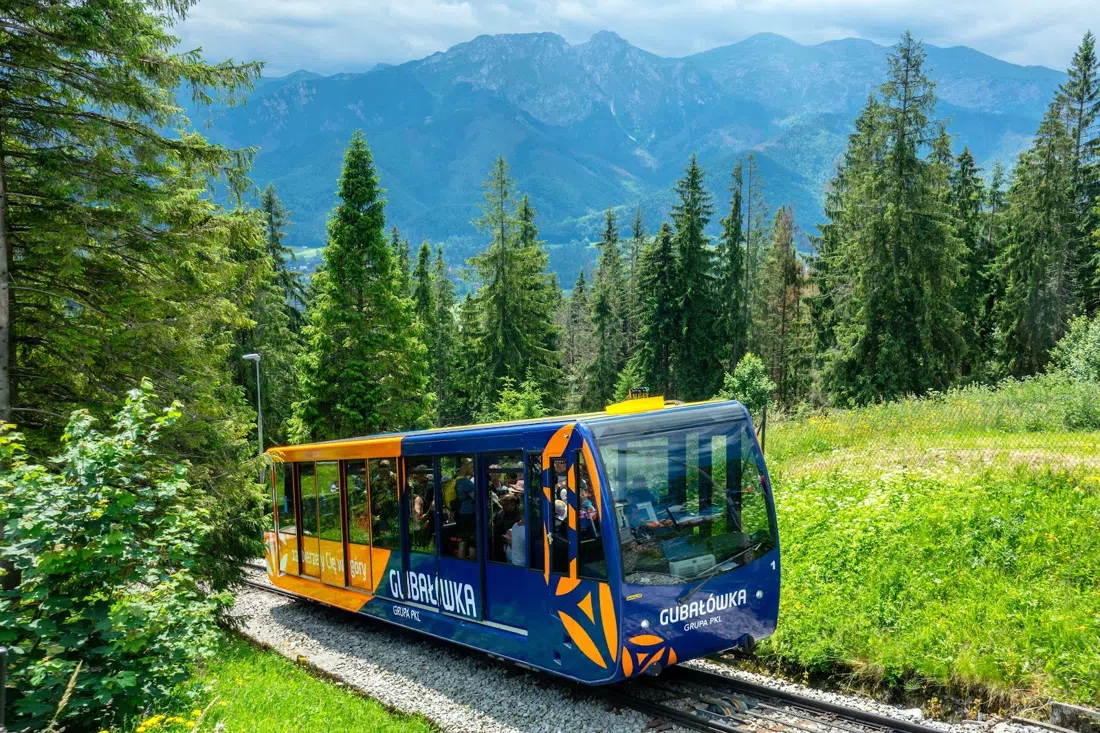
Gubałówka, the hill directly above Zakopane's town centre reached by funicular, is the one deliberately obvious stop on this route, and it is worth including honestly rather than skipping out of snobbery: a round trip runs roughly 37 to 49 PLN and the funicular handles large tour groups with ease. The view is genuinely good on a clear day, but the more interesting story is at the top: a run of cheese stalls selling oscypek and its softer cousins, which is where the funicular earns its place in a folklore itinerary rather than a scenery one. Oscypek has held EU Protected Designation of Origin status since 2008, legally restricted to registered shepherds working within specific highland counties using traditional smoking methods, a real regulatory fact behind what otherwise looks like a tourist snack and worth telling readers so the cheese stops read as economy rather than gimmick.
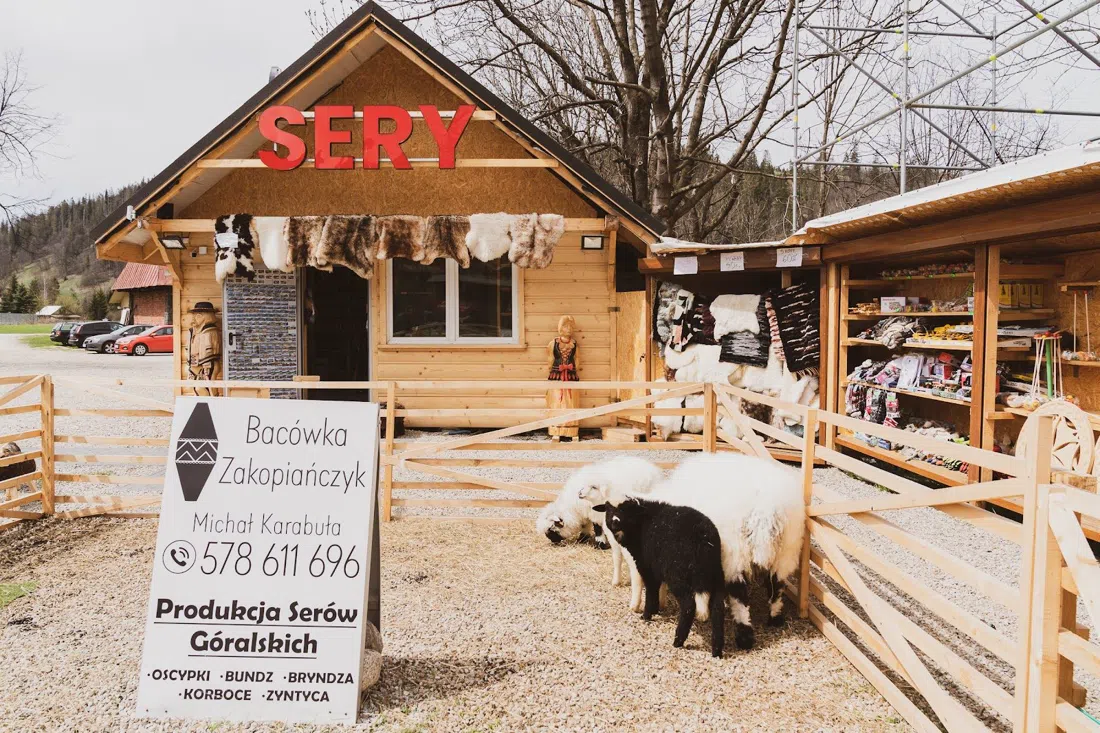
For the fuller version of that economy, go to Bacówka Zakopiańczyk, a working sheep-cheese hut near the Gubałówka side of town, where sheep-feeding happens daily at 10:00 and tastings and purchases run budget to mid-range with no entry fee. It handles big groups comfortably by visitor accounts, and pairing it with the 10:00 feeding time is the most useful scheduling tip on this route: arrive later and you get the cheese without the context.
Where the music and the food still belong to the valley
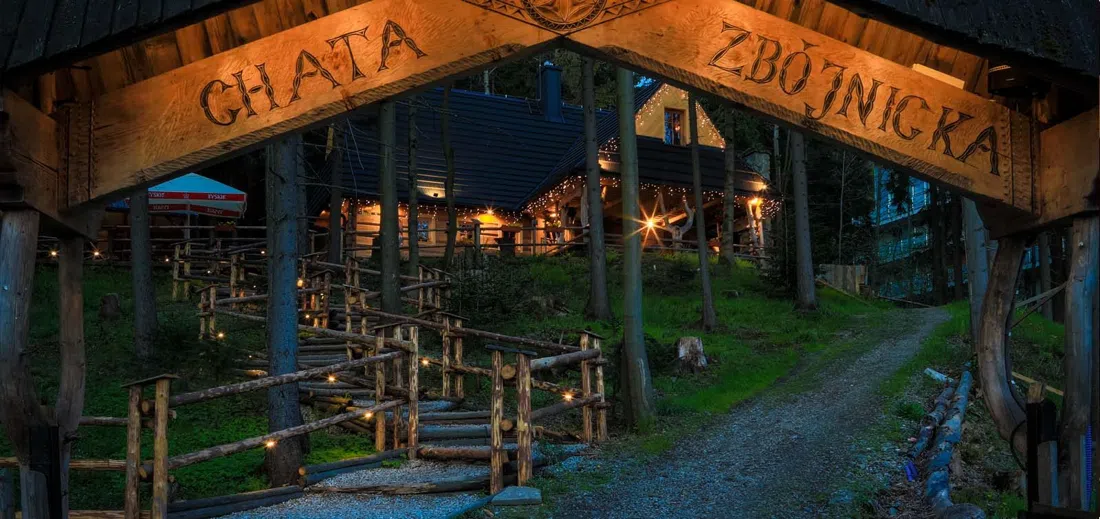
For an evening that is honest about live folklore rather than a staged dinner theatre, Karczma Chata Zbójnicka, a highlander tavern on the edge of town with a forest-lodge feel, was named the best tavern of 2022 by poland100bestrestaurants.pl and books groups at restaurant scale. Reserve ahead, since the live-music evenings fill fast in summer. Its rival for a more historically grounded meal is Karczma U Wnuka, closer to the Krupówki end of town, open daily from 12:00 to 21:00 and accepting group bookings; it has operated continuously for 175 years, which gives it a credible claim to being where gorale food culture actually lived rather than a modern recreation of it built for visitors.
Before or after either tavern, walk Krupówki Street, Zakopane's main promenade, which grew from a market path into the town's spine as its spa-resort reputation took off in the 1880s and 90s. Be honest with readers here, because most guides are not: the stalls directly on Krupówki are largely tourist-grade (mass-produced sheepskin slippers and printed folk motifs) while the genuine Podhale craft, carved woodwork and hand-embroidered textile, sits in workshops on the side streets running off it. Browsing is free and the street handles any size group, but steering a reader off the main strip for ten minutes is the difference between a souvenir and a piece of the actual craft economy this article has been describing.
Getting there, timing it right, and what to bring
Zakopane sits roughly two to two and a half hours from Krakow by bus, minibus, or car via the S7 expressway; regular coach and minibus services run from Krakow's main bus station through the day, and a private transfer is worth arranging for a group heading straight to Chochołów or Orawski Park Etnograficzny rather than starting in town. If the plan includes a night before or after in the city, the Krakow hotel search covers the base for it.
Build the day around the Tuesday-Wednesday museum closures: the Tatra Museum and Willa Koliba are both shut Monday and Tuesday, so a route built around them needs a Wednesday-to-Sunday date. The 10:00 sheep-feeding at Bacówka Zakopiańczyk is the other fixed point worth planning the morning around. Carry cash: the cemetery, the smaller museums, and most cheese stalls are cash-friendly first and card-friendly second, and entry fees across the day are all in the single-to-low-double-digit zloty range, so nothing here breaks a modest budget. A realistic full day covering the town-centre museums, Gubałówka, and a tavern dinner runs to roughly PLN 150-250 per person before transport; adding Chochołów or the Orava skansen as a half-day extension is worth a second visit rather than cramming everything into one exhausted loop.


