
Somewhere between the hiss of a milk bar's steam trays and the hush of a two-Michelin-star dining room, Krakow keeps cooking the same dumpling. I've walked this trail three separate times now — twelve stops, one shape, a filling that runs from potato-and-curd to saffron and back to beef cheek — and it never once got repetitive. This is the order I'd actually walk it, from the price of a bus ticket to the price of a small splurge.
The Milk Bars: Where the Trail Has to Begin
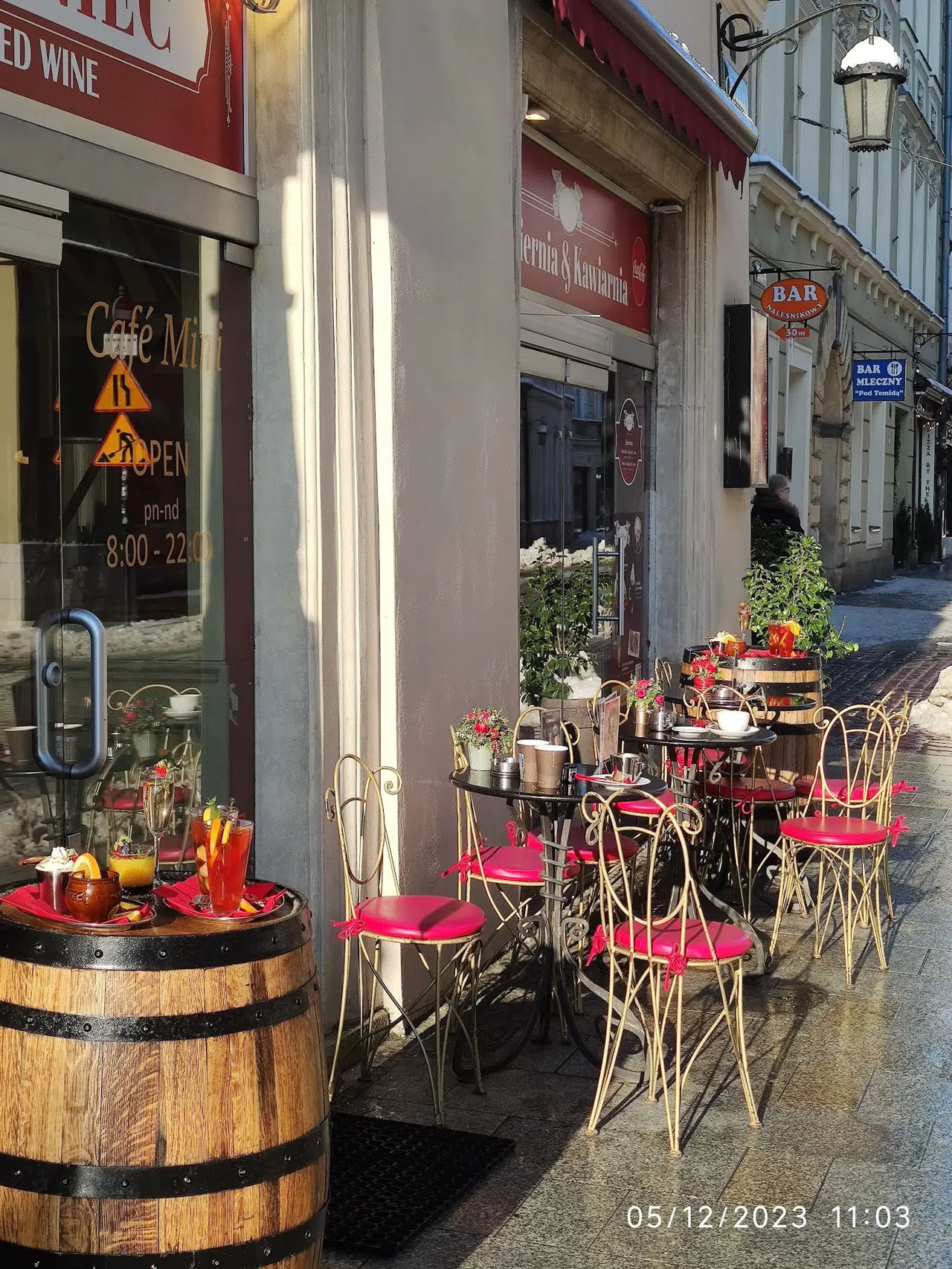
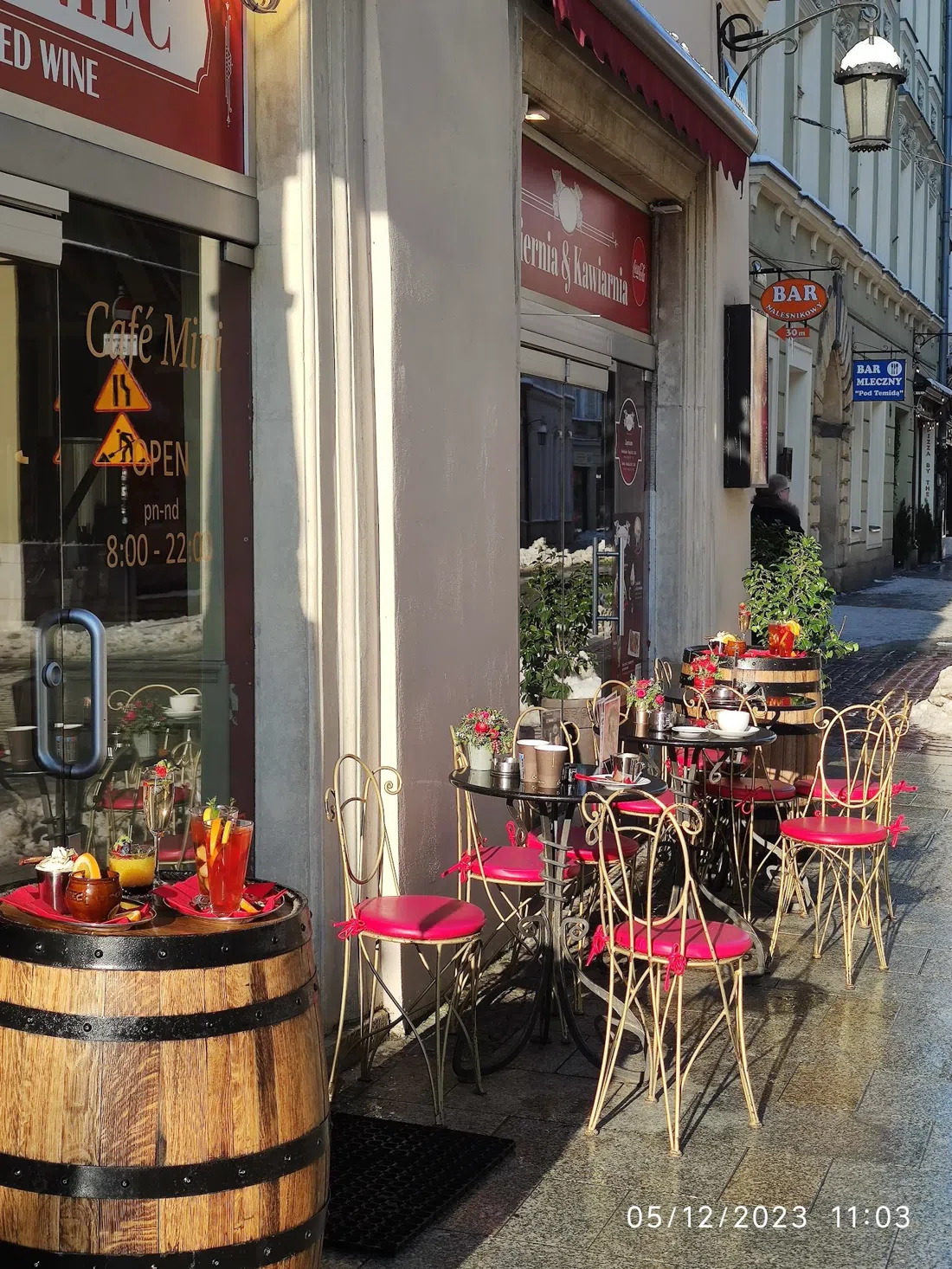
Start at Bar Mleczny Pod Temidą (a few minutes' walk from Wawel), because this is still the real thing: a communist-era canteen where you queue at a hatch, point at a laminated menu, and carry your own tray to a Formica table. A plate of pierogi ruskie — potato and twaróg curd, the classic filling — runs 20-38 PLN (roughly €5-9), which is less than a coffee-and-pastry costs two streets over in the Old Town. It's self-service, walk-in only, no bookings taken, and a small group can squeeze in fine outside the lunch rush — go at half past two and you'll get a table without a queue. My grandmother in Emilia-Romagna would recognise the technique instantly, if not the filling: boil, then pan-fry in butter until the edges blister and go the colour of toast. That's the whole trick, and Pod Temidą does it without a flourish.
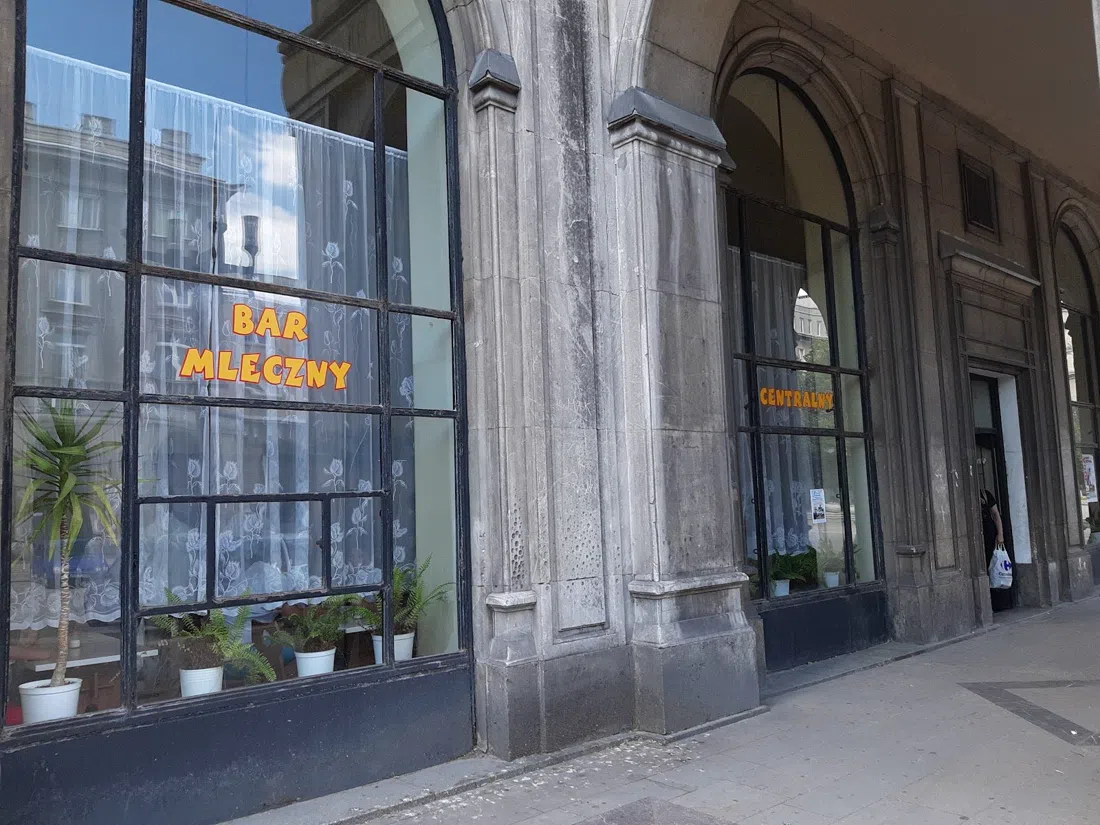
For the fuller version of that story, take the tram out to Nowa Huta for Bar Mleczny Centralny, which has barely changed since it opened in the early 1950s — same neon sign, same no-nonsense canteen service, no bookings, and it absorbs walk-in groups easily once the lunch rush clears. Plates run 15-30 PLN (€4-7), the cheapest on this whole trail, and the pierogi ruskie here is the most unreconstructed bowl I've eaten in the city — slightly heavier on the curd, fried a shade darker than in the centre. It's worth the twenty-minute tram ride for the room alone, but it earns its place on the trail on the plate.
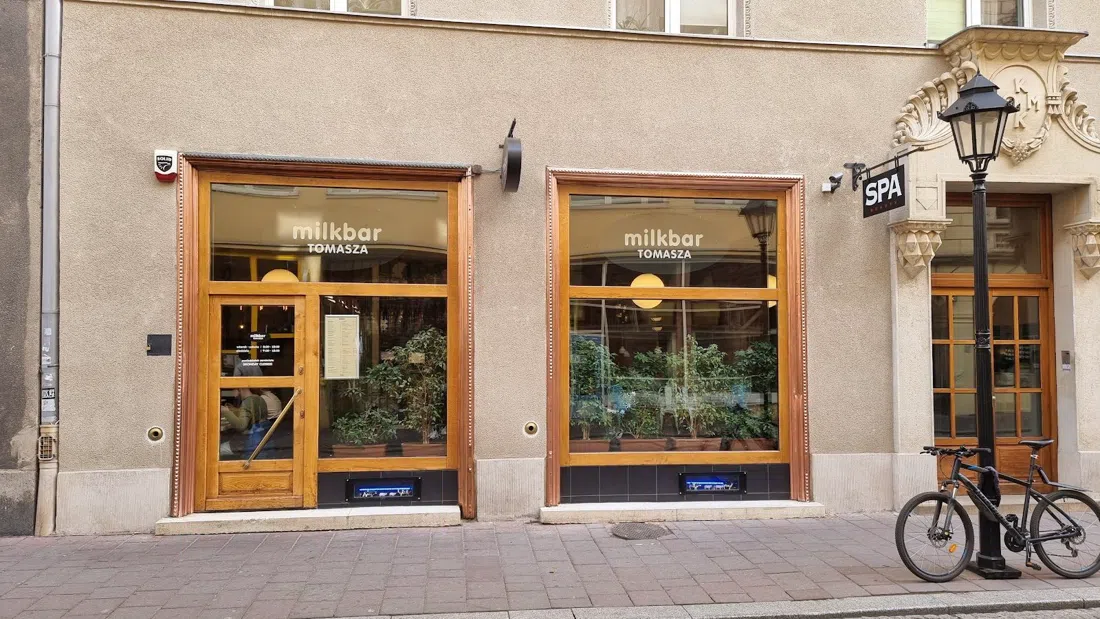
If ordering at a hatch in Polish sounds like a hurdle, Milkbar Tomasza (Old Town) is the milk bar concept with the intimidation filed off: counter service, an easy-to-read menu, no reservations, and pierogi that taste every bit as honest as the originals, 20-35 PLN (€5-8) a plate. It handles four to six people comfortably; much bigger and you're better off splitting the group, since the tables are small and turnover is brisk rather than leisurely. Think of it as the milk bar you'd send a first-timer to before graduating them to Pod Temidą.
The Everyday Counters: Pierogarnie and Canteens
Between the milk bars and the sit-down rooms sits Krakow's real workhorse tier — the dedicated pierogarnie, plus one traditional canteen that splits the difference.
Kuchnia Staropolska U Babci Maliny (Old Town) is that middle step: proper table service rather than a tray-and-hatch system, and it takes both groups and walk-ins, though in peak season the queue outside is part of the ritual — I've stood in it twice, both times worth it. A plate of ruskie or meat pierogi runs 29-44 PLN (€7-10), a little more than the milk bars for the comfort of a menu brought to your table and a chair that isn't bolted down.
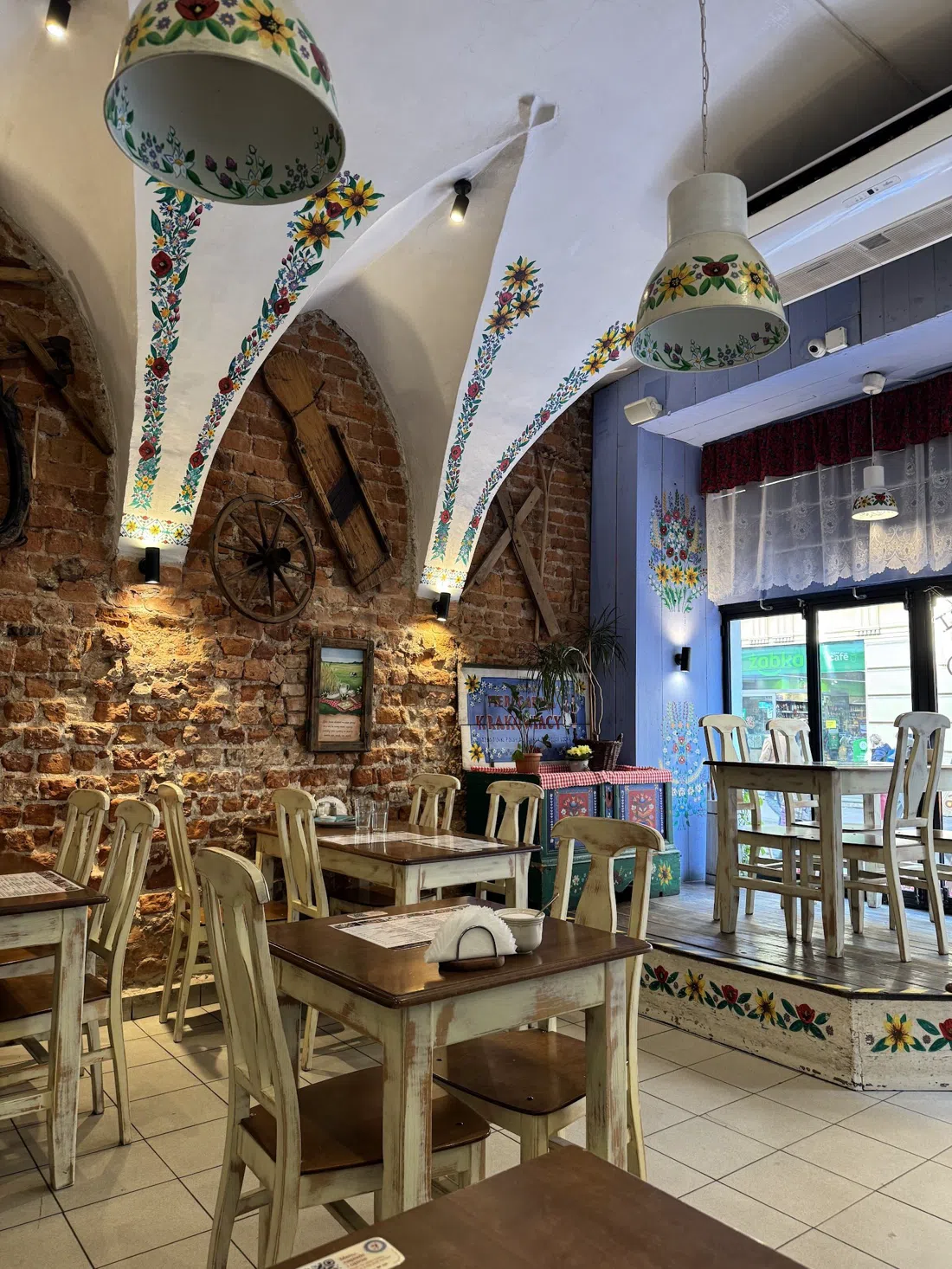
For something cheaper and faster, Pierogarnia Krakowiacy sits right on the Old Town's tourist strip but hasn't let that dilute it — locals still eat here, and at 12-22 PLN (€3-5) a plate it's the best-value hot meal within sight of the Main Square. No reservations, counter-and-table service, and it handles groups fine outside the lunch peak; arrive at 1pm on a Saturday and you'll wait.
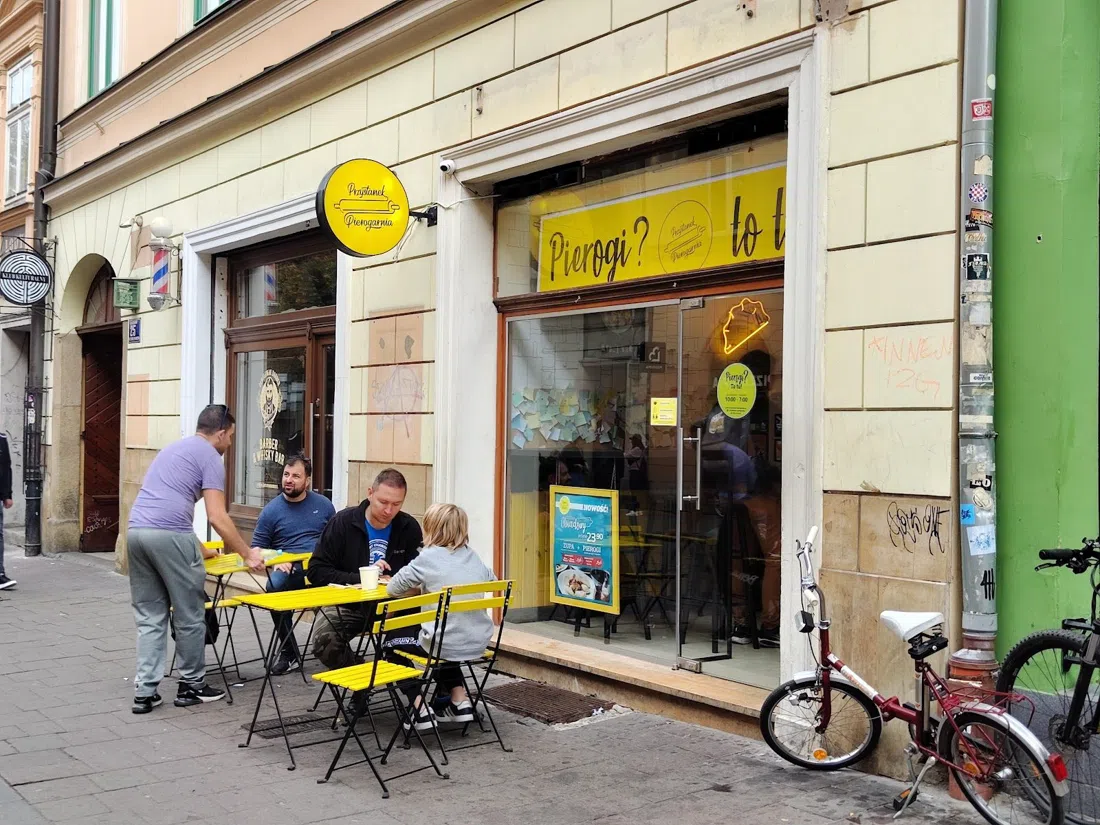
Przystanek Pierogarnia, with several branches scattered across the city, is where the trail turns creative — vegan fillings, seasonal specials, spinach-and-blue-cheese sitting next to the classic ruskie, 20-40 PLN (€5-9) a plate. It's consistently the highest-rated dedicated pierogarnia in Krakow, and because there's more than one branch, a group can just pick whichever is closest rather than trekking across town. Casual counter service, easy for small groups, no bookings needed.
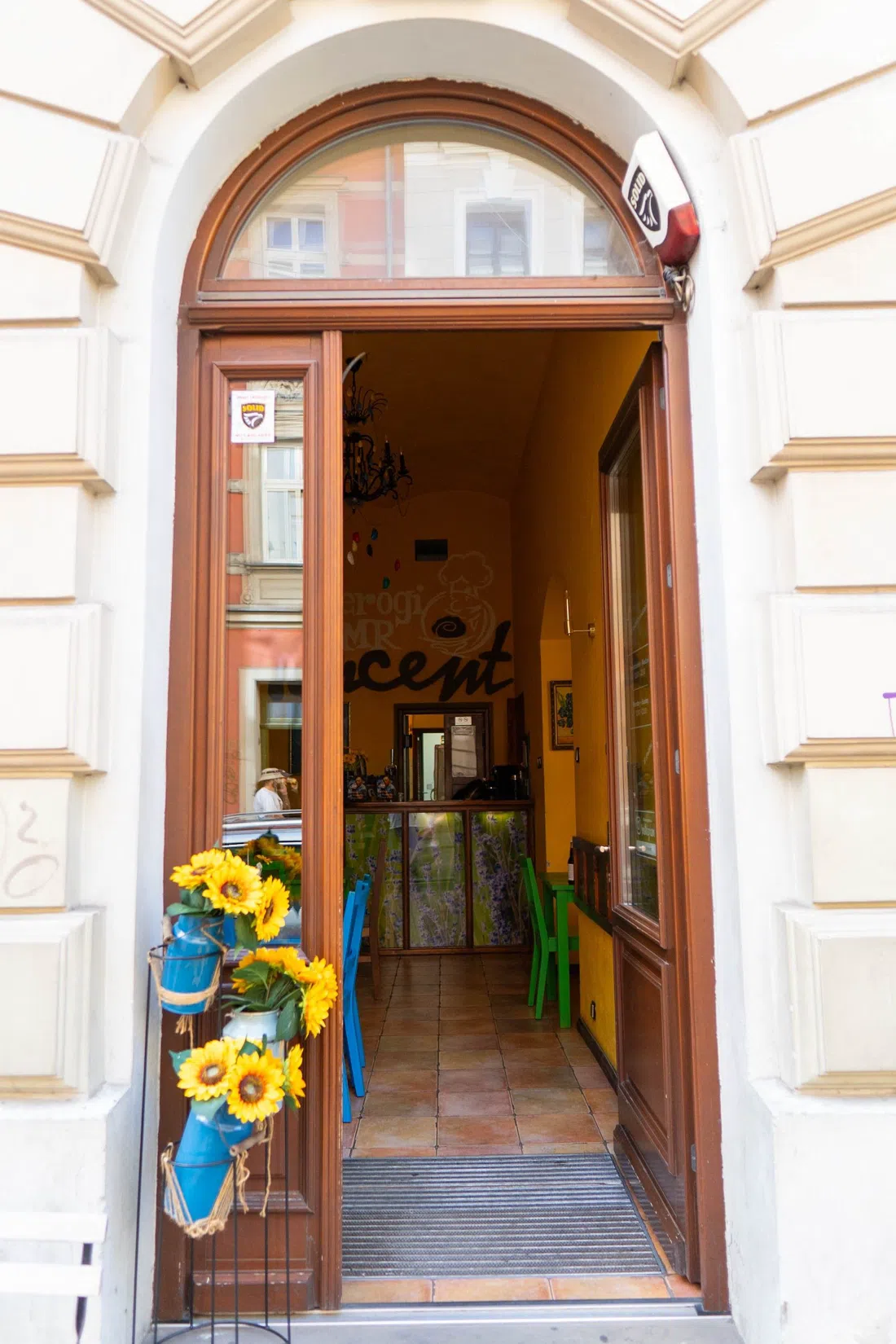
Duck into Kazimierz for Pierogi Mr Vincent, the district's cult pierogi counter — genuinely small, best suited to pairs or a party of three squeezed onto stools, with takeaway the sensible fallback for anyone bigger. Order the apple-and-liver or lamb filling, neither of which turns up on the tourist-trail menus elsewhere on this list, at 12-18 PLN for a portion of ten. It's the cheapest way to eat something you won't find at the milk bars, and worth the detour on its own.
Sit-Down, Groups, and a View
Once you want a table booked in advance rather than a tray carried to one, the trail moves into Old Town proper.
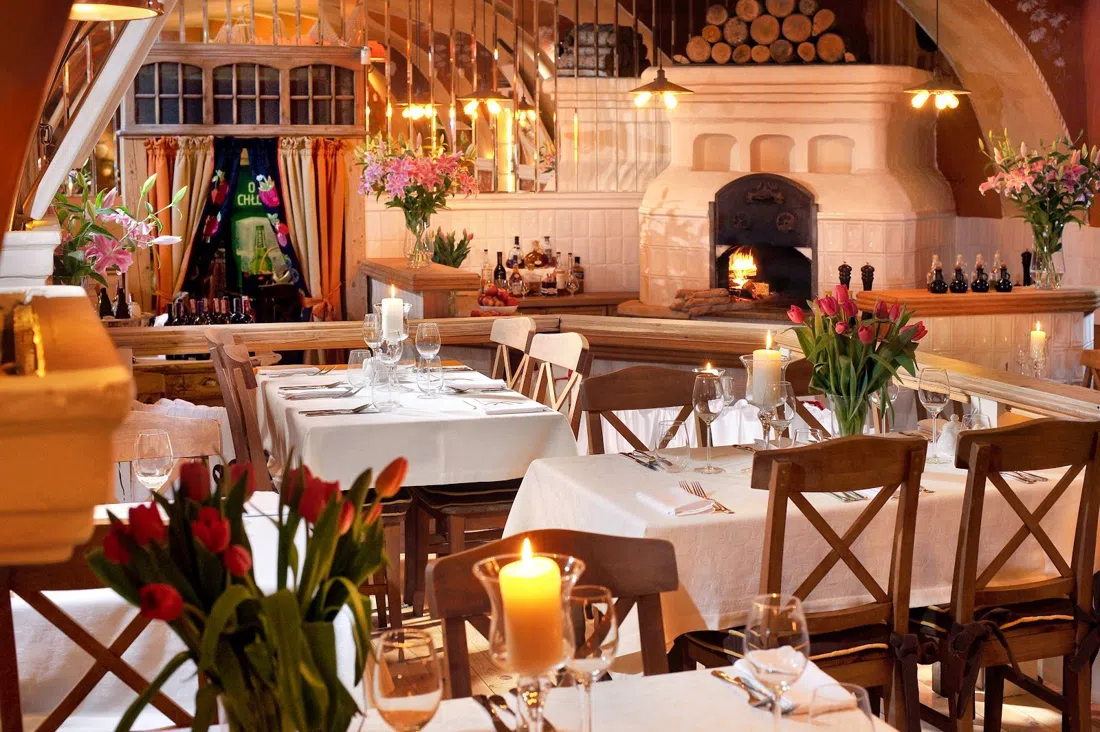
Miód Malina treats pierogi as a main event rather than a tourist afterthought — a proper sit-down restaurant between Wawel and the Main Square that takes reservations and handles larger parties comfortably, 35-55 PLN (€8-13) a plate. It has more than 8,800 reviews sitting at a 4.9 average, which for a restaurant this size and this central is not an accident; I've eaten here twice and both times the pierogi were fried, not just reheated, which is the detail that separates the good rooms from the mediocre ones.
For scale, Smakołyki (Old Town) is built explicitly for groups — its lower hall seats up to 80 — and it's the rare central restaurant that's both excellent value and genuinely equipped to feed a full tour group without the kitchen buckling, at roughly €13-15 per person. If you're travelling as ten or more, this is the booking to make; most of the rest of this list will either turn a party that size away or split it across tables.
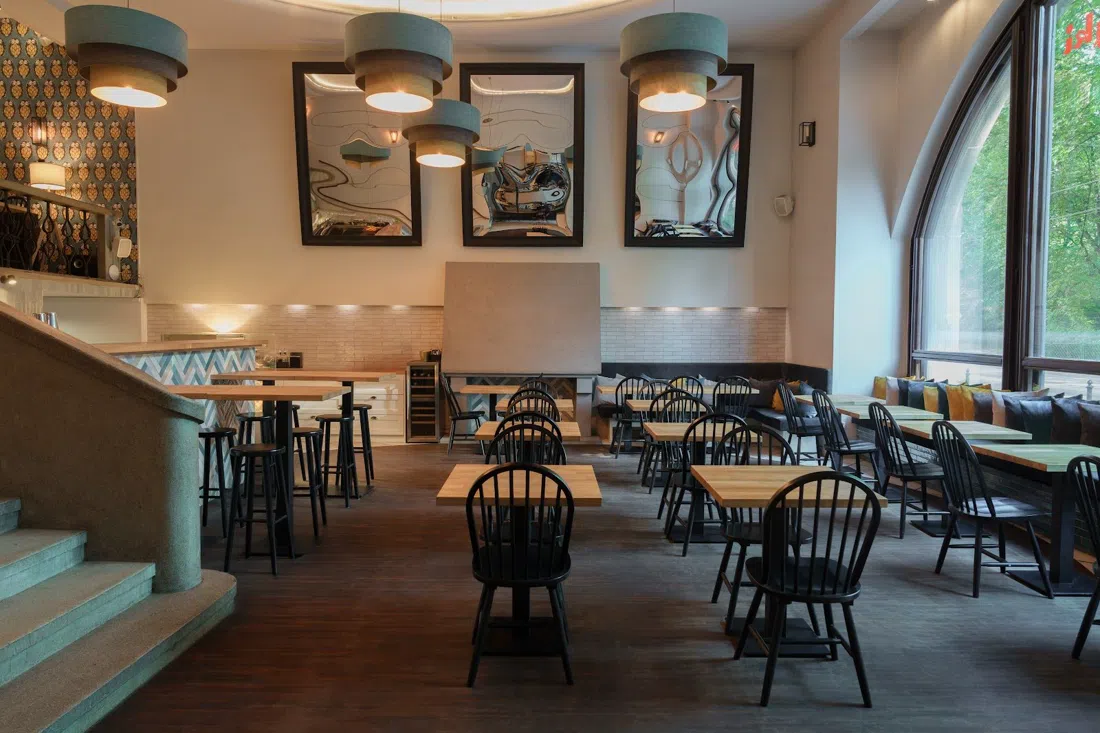
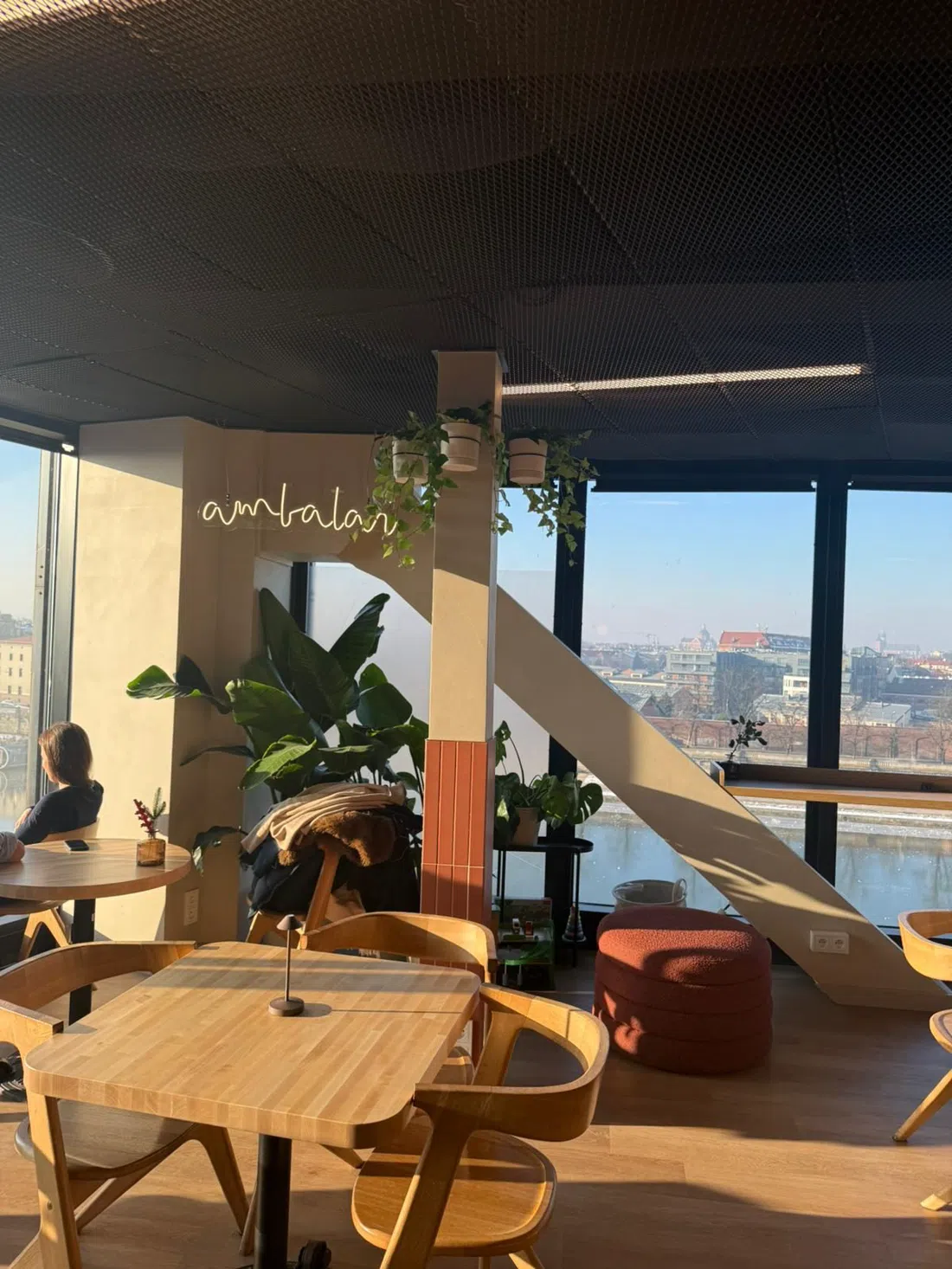
If you want the photograph as much as the plate, Ambalaż Café, up above the river, does pierogi ruskie at 39-43 PLN (€9-10) with the whole Wisła laid out below — no basement dumpling bar on this trail can compete with that view. It takes reservations, which is worth doing for a group, since the tables with the best outlook fill first.
Where the Trail Gets Serious
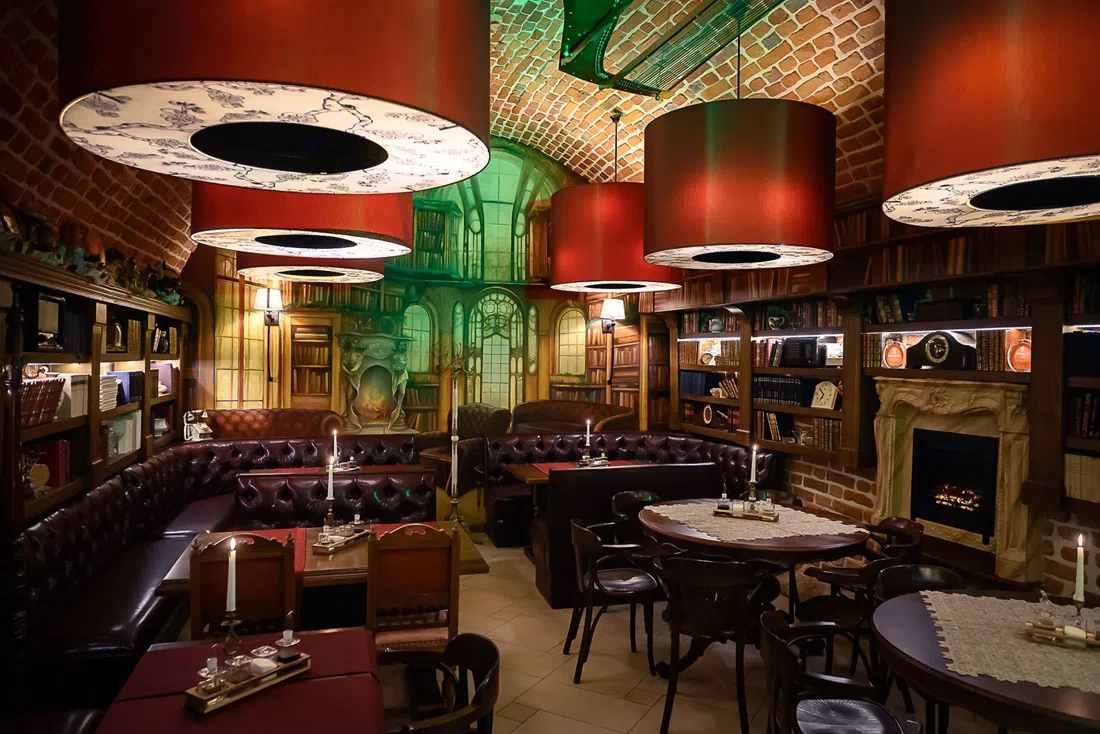
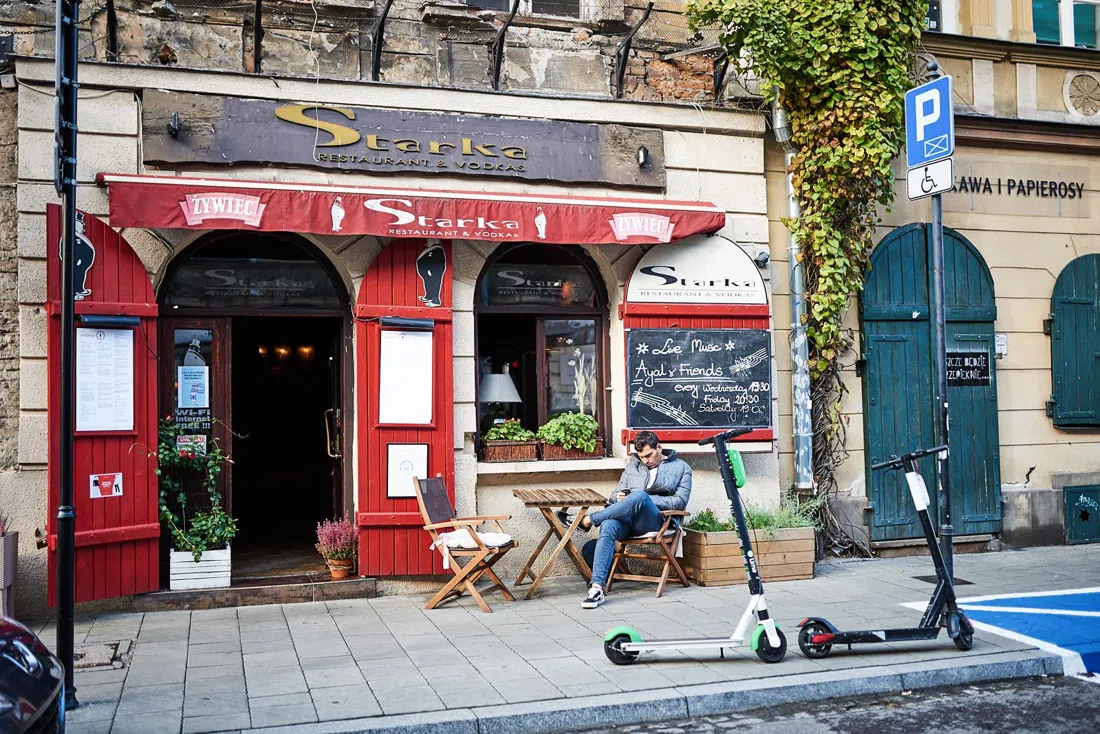
Starka (Kazimierz) is the bridge between milk bar and tasting menu — home cooking elevated rather than reinvented, with beef-cheek and blood-sausage pierogi on the menu alongside a proper list of horseradish and other flavoured vodkas, 40-70 PLN (€9-16) a plate. Reservations are recommended, and the room comfortably seats groups for a sit-down dinner. This is where I'd bring anyone who thinks pierogi is only ever a lunch dish — the blood-sausage version, fried hard and served with crisp fried onion, is closer to a confident main course than a snack.
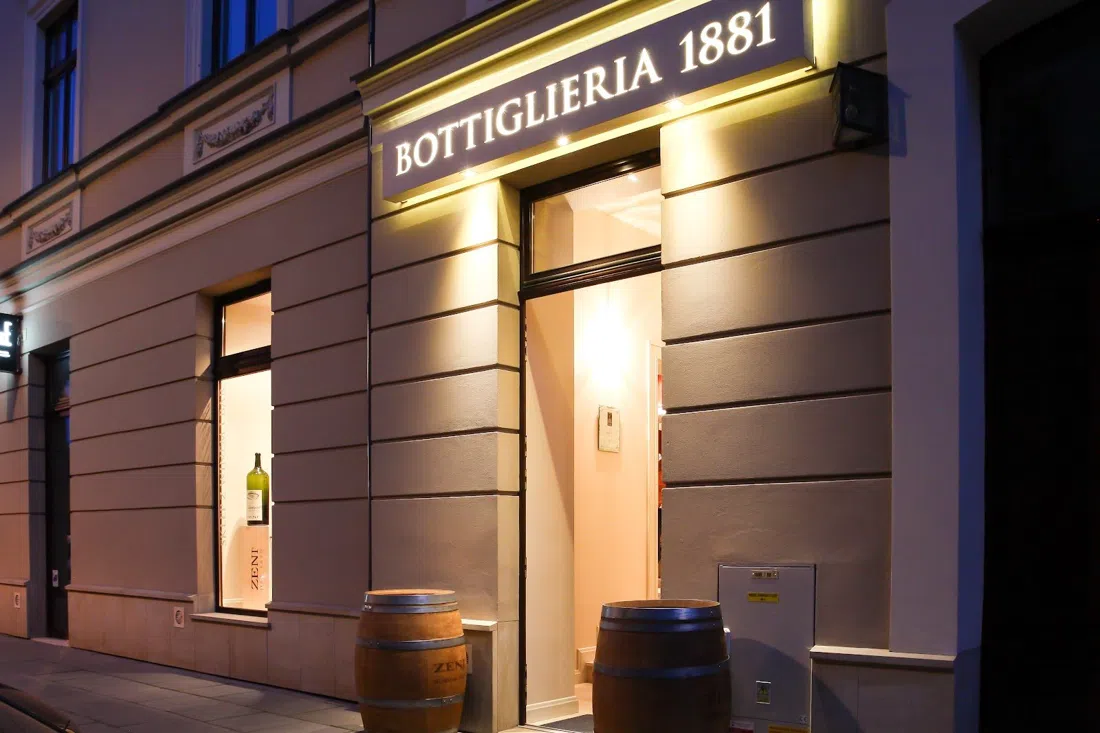
And then there's the plate the whole trail is really walking towards: Bottiglieria 1881, Poland's only two-Michelin-star restaurant, where the saffron pierogi is the destination. This is a tasting menu running several hundred złoty per person (roughly €120-180+), reservations are essential and the room books out well ahead — plan weeks, not days. It's an intimate space built for small parties, not a group venue, so this is the stop to do as a pair or a party of three or four, not the whole trip's travelling group. The dish itself is unmistakably the same shape you ate at Pod Temidą on day one: boiled, sealed, plated with a discipline a milk bar hatch was never built to offer, but the DNA — the fold, the seal, the bite through a thin skin into a soft filling — is identical. That's the point of walking the trail in order: by the time you eat the saffron version, you know exactly what it's being measured against.
The Practical End
Transport: Everything on this list except Bar Mleczny Centralny sits within a twenty-minute walk of the Main Square or a short tram ride through the Old Town and Kazimierz. Centralny is the outlier — it's out in Nowa Huta, a 20-25 minute tram from the centre, so build it into a day that also covers the district's Soviet-era architecture rather than a standalone pierogi run.
Cash: Milk bars in particular still lean cash-friendly, and a few of the smaller pierogarnia counters — Mr Vincent especially — are easier with złoty in hand than a card at a tiny terminal. Carry some regardless of what you plan to eat; a cash machine queue is a worse way to lose ten minutes than a pierogi queue.
Timing: Lunch, roughly noon to 2pm, is when every milk bar and pierogarnia on this list gets busiest; eat at 11:30 or after 2:30 and the queues thin out considerably. Bottiglieria 1881 and Starka run on restaurant hours and need booking regardless of time of day.
Budget: You can eat well and repeatedly for under 40 PLN a plate at every stop except Miód Malina, Starka, Ambalaż, and Bottiglieria 1881 — meaning the bulk of this trail is genuinely budget travel, with the Michelin plate at the end as the one deliberate splurge. A realistic day covering three or four stops, milk bar to pierogarnia to a sit-down dinner, comes in under 150 PLN (about €35) per person before drinks.
For where to sleep between stops, Krakow hotel search covers the centre and Kazimierz both; and for the rest of the city beyond the dumpling trail, see the Krakow guide.