The Krakow issue
October in Krakow Before the Towers Shut for Winter
The last month Krakow works outdoors: what to climb, what to book weeks ahead, and which doors close on 31 October and stay closed until spring.

By Rhys LlewellynKraków on foot — sights, neighbourhoods and the slow city
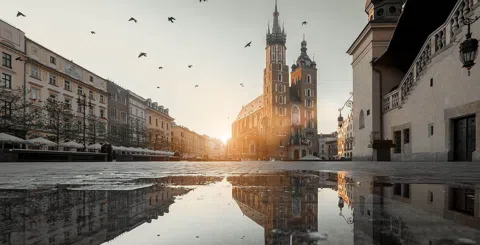
The Planty, the ring of park that replaced the city walls, turns colour in the first fortnight of October, and by mid-month the sun comes in low and almost horizontal across the Main Market Square from four in the afternoon onward. It is the last month Krakow properly works outdoors. On 31 October a specific set of doors closes until spring, and knowing which ones is most of what separates a well-planned October trip from a frustrating one.
What the month actually feels like
Daytime highs sit around 13–14°C in the first week and drift into single figures by the last; nights run a few degrees above freezing. Rain comes in showers rather than settling in for days, so a shell and one warm layer will cover you. The cold here is dry and still, and it does not cut the way coastal autumn does.
Daylight is the bigger variable, and it is the one most first visits get wrong. On 1 October the sun sets at roughly 18:20. The clocks go back on Sunday 25 October 2026, and from that evening sunset lands closer to 16:20. An hour of usable afternoon vanishes overnight. Put the outdoor things in the first three weeks and the indoor things in the last.
Crowds are thinner than July, though the square is still busy on Saturdays and the first half of the month carries festival traffic. The Planty is the reason the light works so well. It was laid out in the 1820s along the filled ditch left when the medieval fortifications were pulled down, which is why the Old Town is a ten-minute walk across in any direction and why every approach to it passes through trees. In October your commute between sights is the best colour in the city.
Plan your Krakow trip
Live prices from our booking partners.
Free cancellation on many rooms. We may earn a commission when you book.
The doors that shut on 31 October
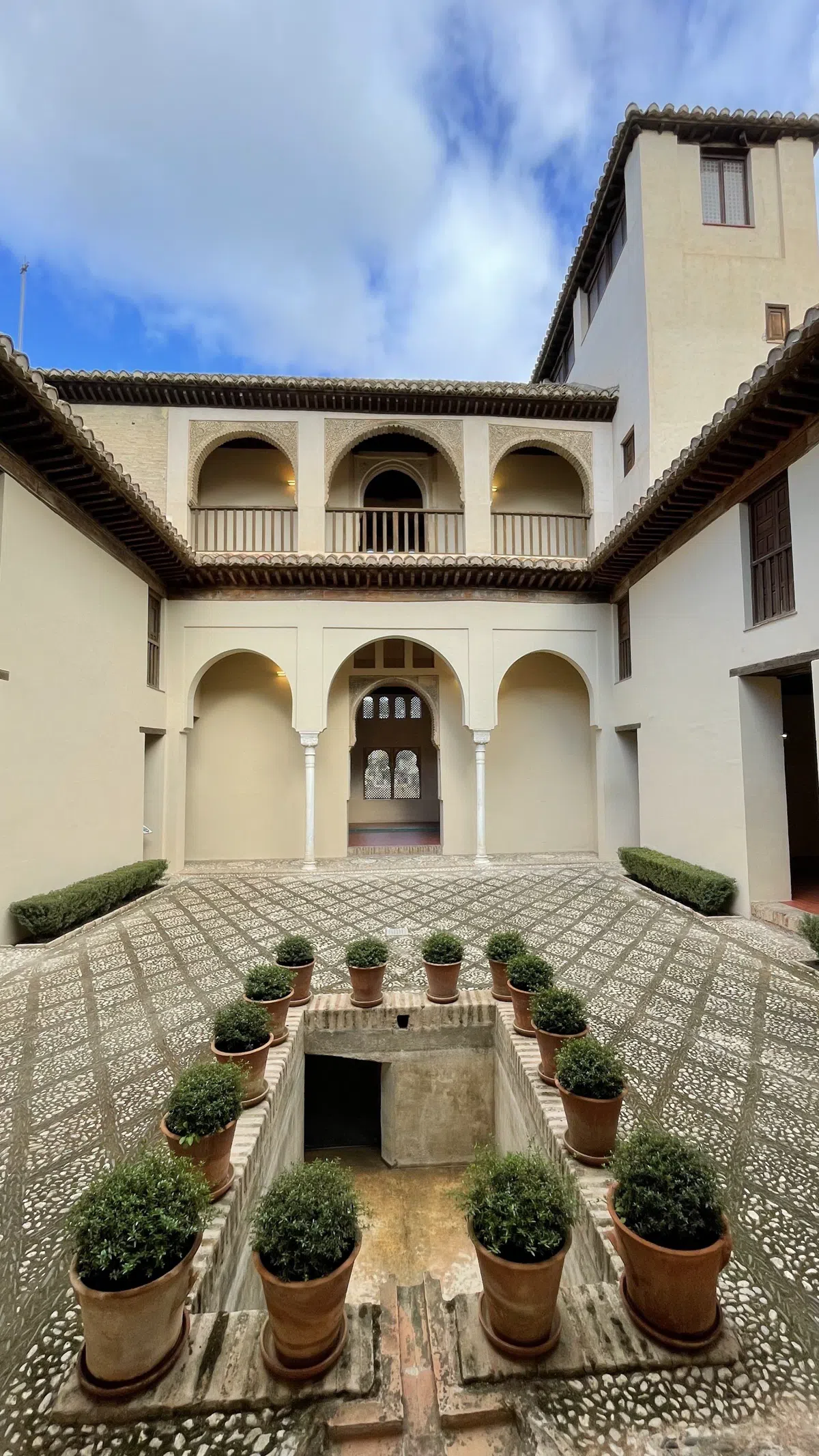
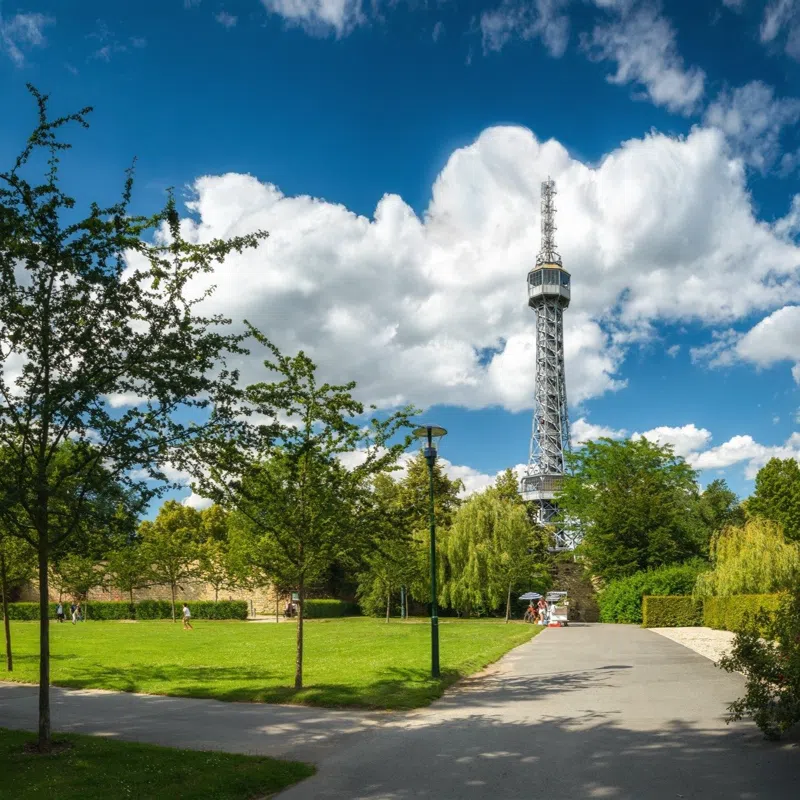
Wawel Royal Castle (Wawel Hill, at the southern end of the Old Town) keeps its open-air parts (the Royal Gardens, the Viewing Tower and the Dragon's Den) running only to 31 October. After that they shut until late April. The indoor exhibitions continue through winter at 11–95 PLN depending on what you choose; the combined first-and-second-floor ticket is 95 PLN, or 71 PLN reduced. Free-entry days exist but explicitly exclude organised groups, and groups must arrange guides through the Reservations Office, with private guide requests submitted 14 days ahead. Joining a scheduled guided group costs 20 PLN a head.
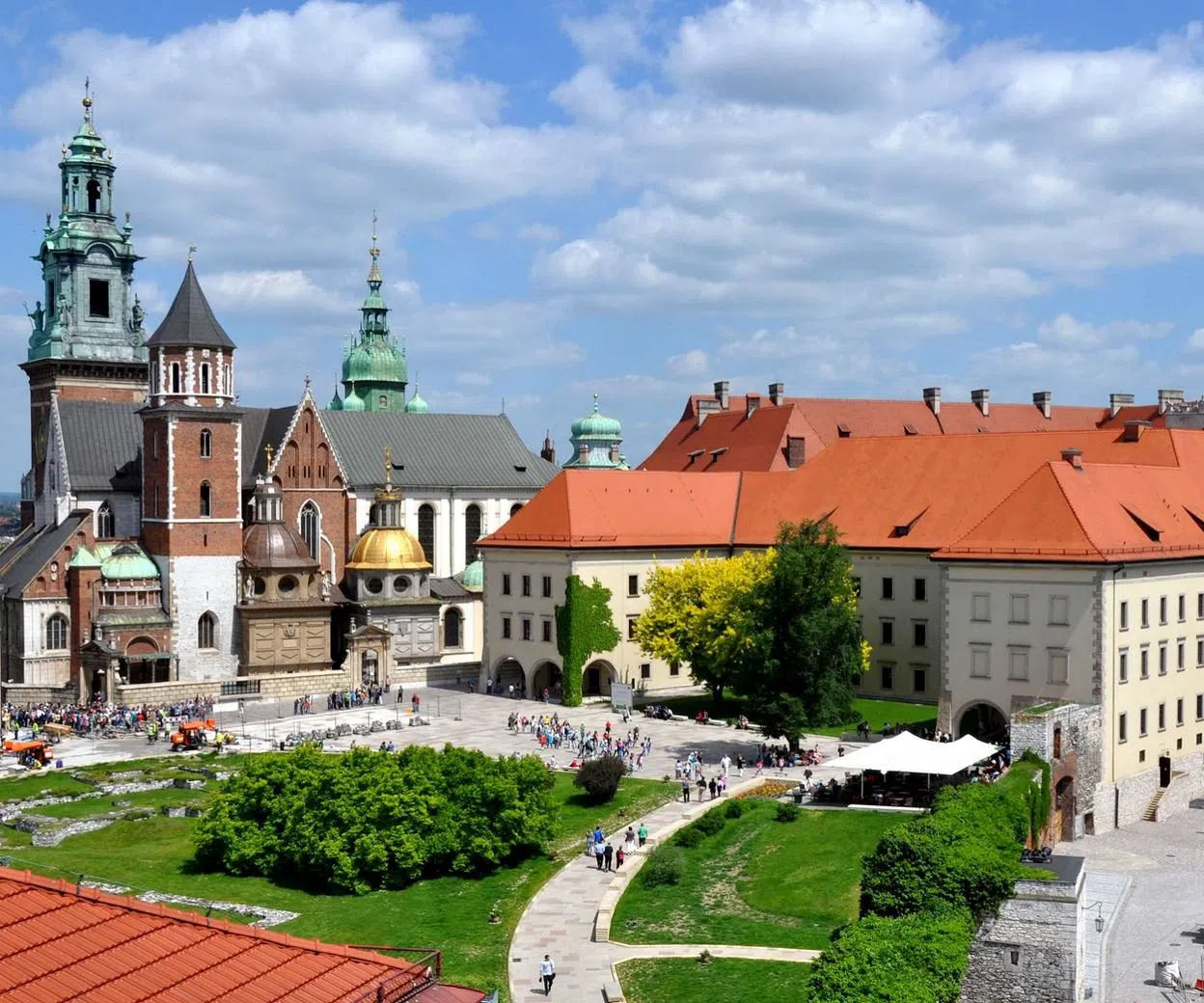
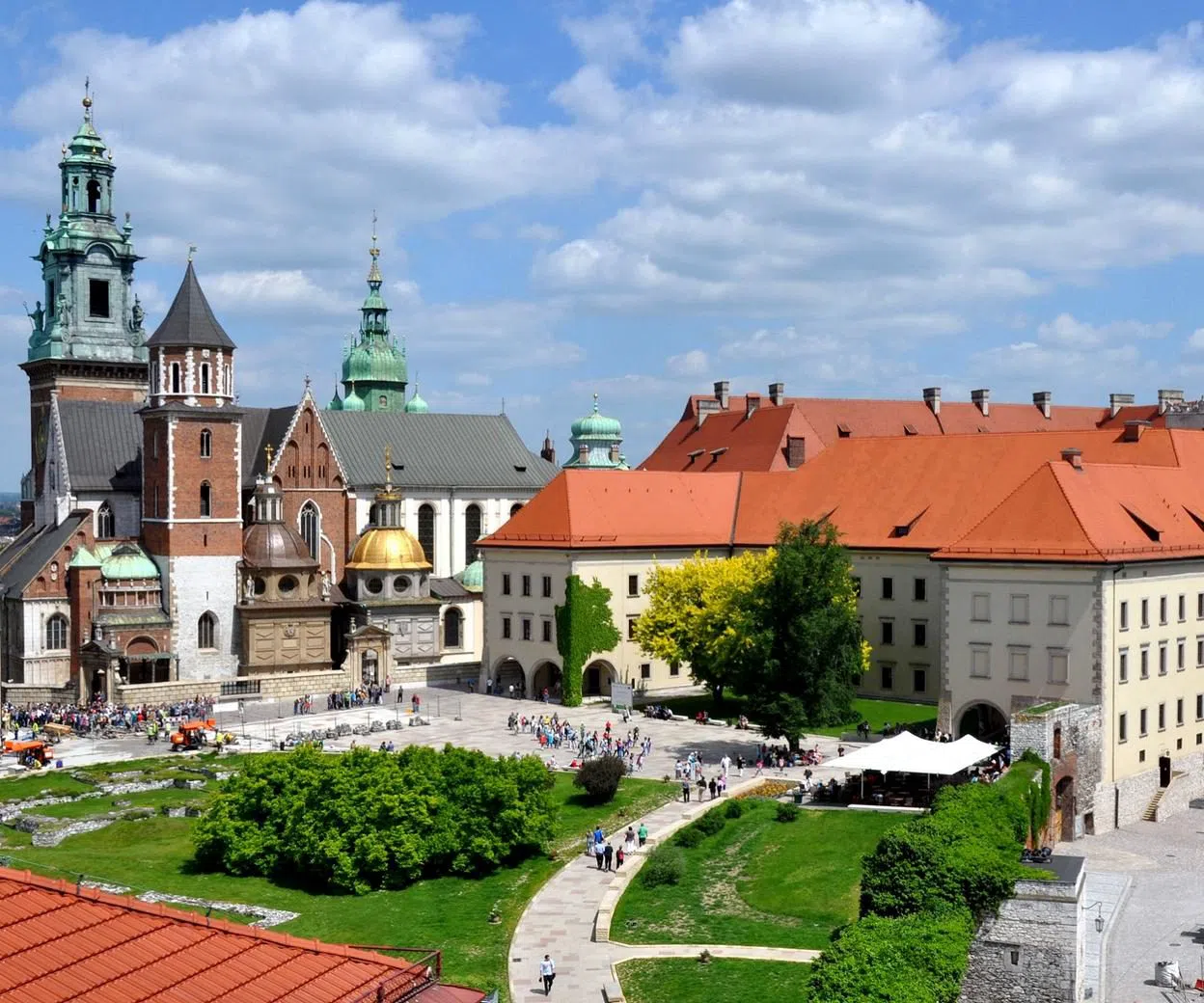
The castle's arcaded courtyard was rebuilt in Italian Renaissance style for Sigismund I in the first decades of the 1500s. It was designed to be read from below and from outside, which is exactly what the gardens and the tower let you do while they are open. Do them early in your trip, not on your last afternoon.
A morning walk from the square to the hill
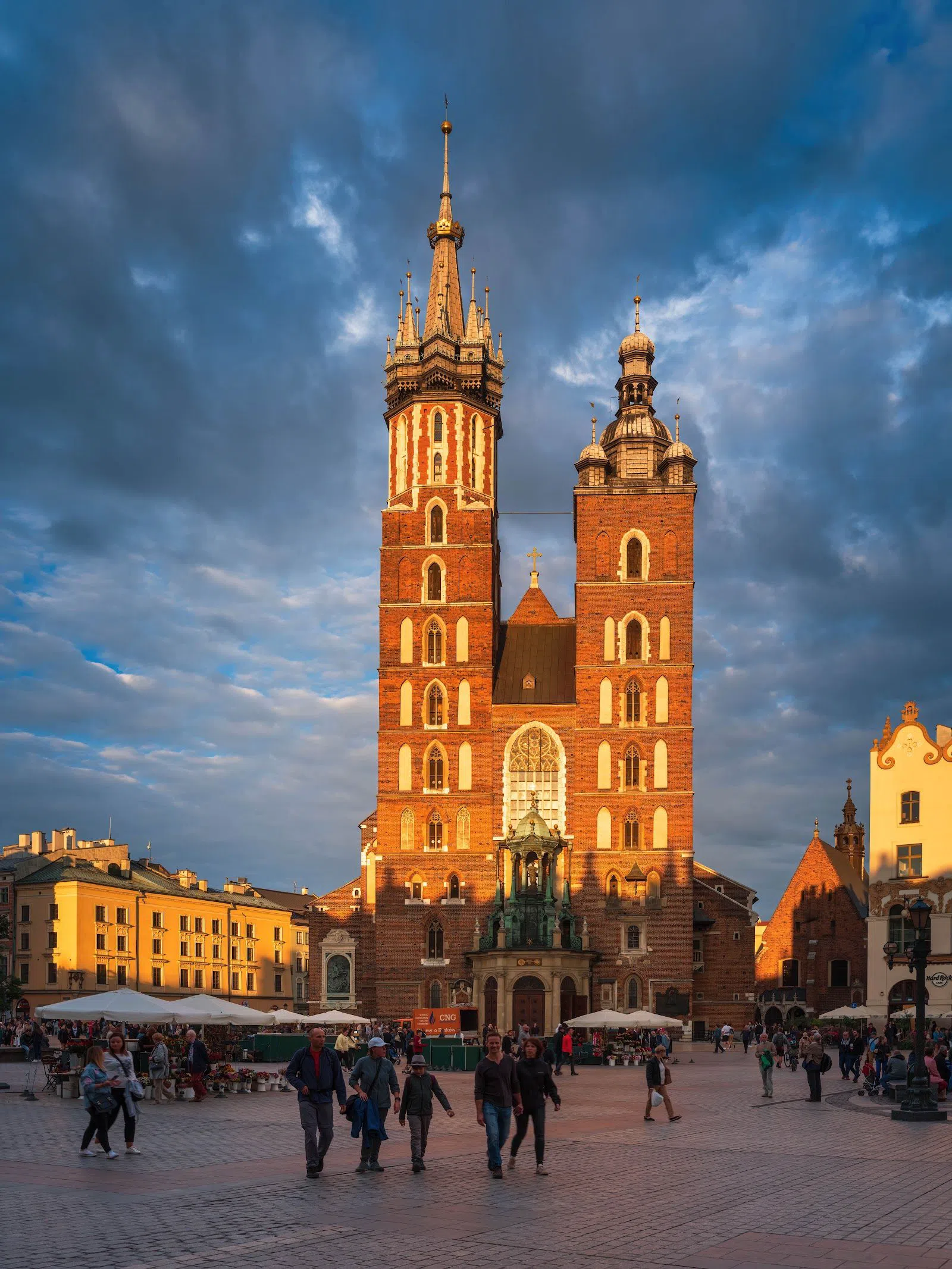
Begin on Mariacki Square. St Mary's Basilica (Main Market Square) takes groups freely at 20 PLN, or 10 PLN reduced. The Bugle Tower beside it is the harder ticket and the more rewarding one: a maximum of 15 people per entry, two groups an hour, tickets sold same-day only at the visitors' desk on Mariacki Square, with no advance booking of any kind. It costs 20 PLN, 15 PLN reduced. Arrive when the desk opens and take whatever slot you are given; by late morning the day can be gone. The tower closes from November to April, so October is the last window.
The hejnał, the bugle call, is played live from up there every hour, and if your slot falls on the hour you hear it at the source rather than as a thin echo across the square. It breaks off mid-phrase. The story attached to that broken note, a trumpeter shot mid-warning, reached an international audience through a children's novel published in 1928, long after the call itself was established. The tradition is old; the legend is younger than most people assume.
From Mariacki Square, walk south down Grodzka. It is ten minutes, straight, and it delivers you at the foot of Wawel with the light still high enough for the Viewing Tower.
Where the colour is best seen
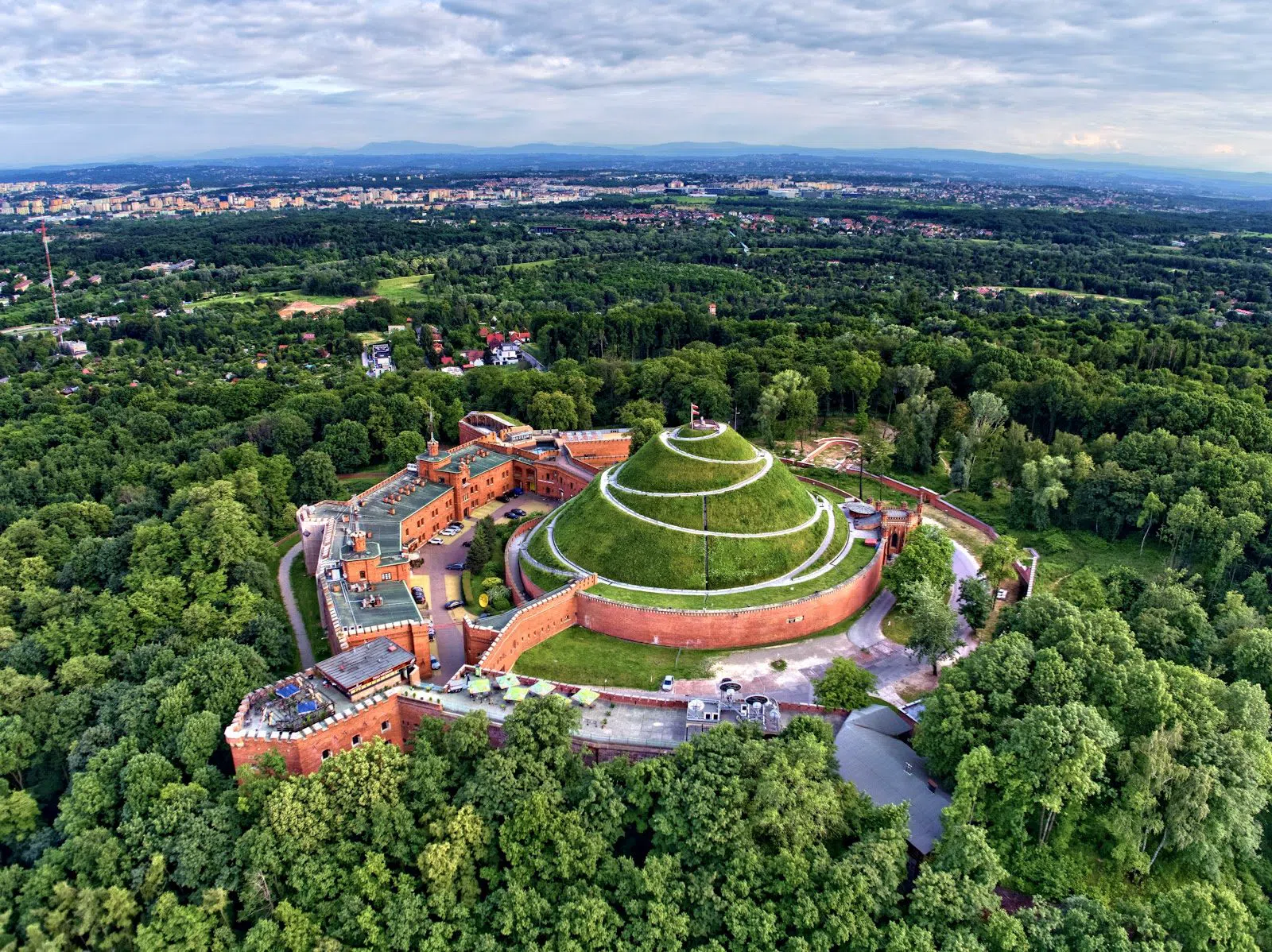
Kościuszko Mound (Zwierzyniec, west of the centre) is a walk-up site with no booking and no queue system: tickets are sold on the spot by cash or card at the kiosk by the car park, at around 20–30 PLN. It is the best autumn-colour vantage point in the city and it is rarely crowded, because it takes a tram plus a climb to reach and most visitors never leave the Old Town. You look east over the whole medieval core and west into woodland. Check the hours before setting off. They shorten sharply in the second half of October once the clocks go back, and there is nothing more annoying than arriving to a closed kiosk in the dark.
The mound was raised by public subscription in the 1820s in memory of Tadeusz Kościuszko, using earth carried from the battlefields he fought on. The Austrians later built a brick fort around its base, and that fortification is the wall you pass through on the way up.
Rooms for a wet afternoon
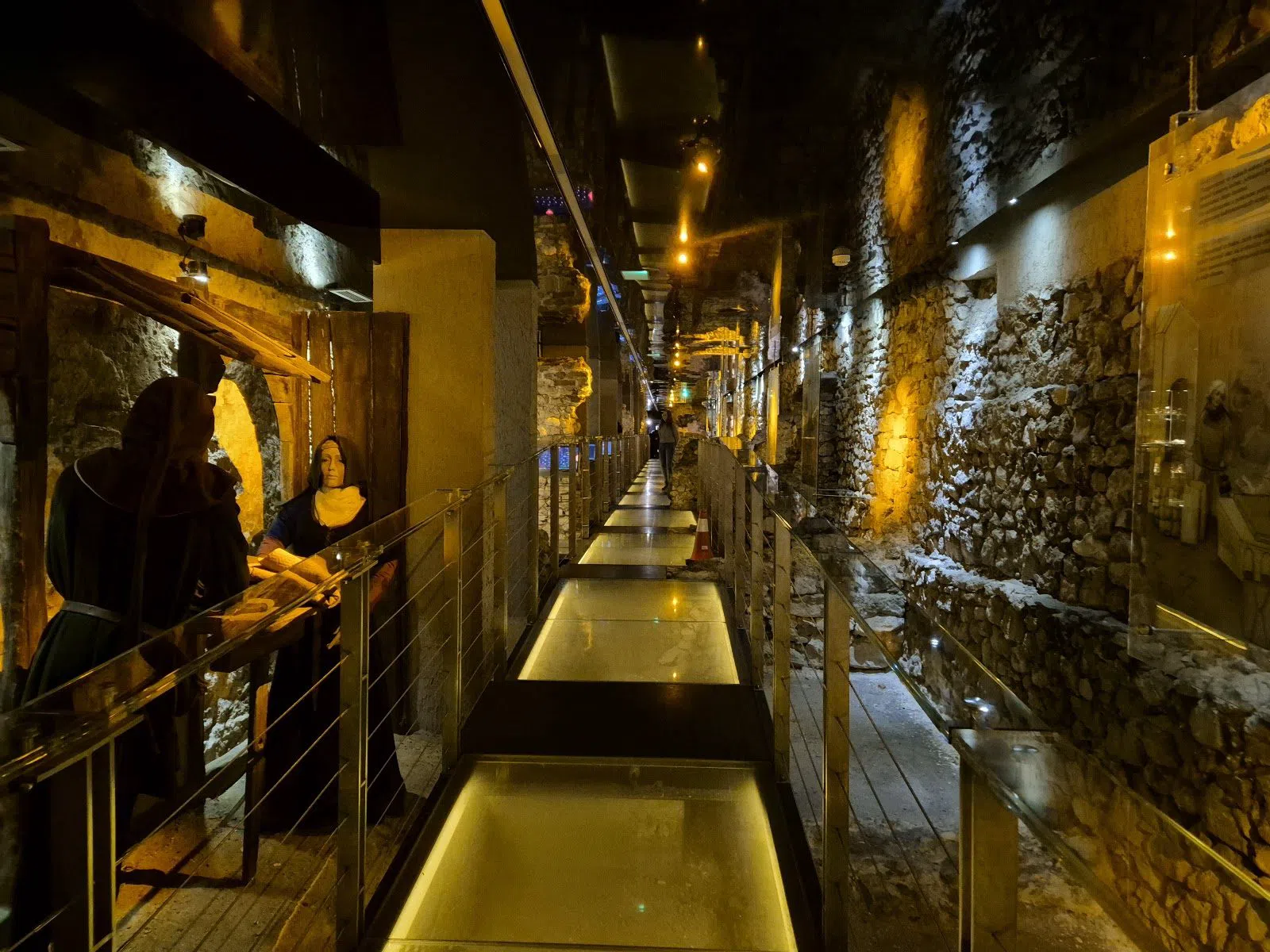
Rynek Underground (directly beneath the Main Market Square) is the best wet-afternoon room in the city and it sits under the paving you were standing on an hour earlier. Tickets are 45 PLN standard, 35 PLN reduced, 90 PLN family; groups pay a reduced 35 PLN per head and school groups 26 PLN. The slots are timed and they sell out, so book ahead. Note one closure: Monday 12 October 2026, the second Monday of the month. The museum exists because a mid-2000s excavation under the square uncovered the medieval trading levels several metres down, and the display was built in place rather than lifted out.
Oskar Schindler's Enamel Factory (Zabłocie, across the river from Kazimierz) occupies the real enamelware works on Lipowa Street, but the permanent exhibition is 'Kraków under Nazi Occupation 1939–1945', a city history museum rather than a film set, and it is worth going in with that expectation. Entry is 60 PLN, 45 PLN reduced; English guided tours run Tuesday to Sunday at 10:00, 12:00 and 16:00 for 90 PLN; groups of eight or more pay 45 PLN each. Pre-booking is required, not merely advised. Allow two hours and expect narrow rooms and slow-moving crowds.
A day at the memorial
The Auschwitz-Birkenau Memorial and Museum lies roughly 70 km west, about an hour and a half to two hours each way by bus. In October the site is open 7:30–18:30, but until 31 October the 10:00–15:00 window admits only guided visitors or organised-group passes, so an unguided visit means arriving early or arriving late, with no middle option. An entry card for a self-guided visit is free; a guided tour with an educator and headset runs to roughly 100 PLN per person. Guided slots open up to five days ahead and only Museum-licensed educators may lead visitors, which means no outside guide you hire elsewhere can take you round. Organised groups book an Entry Pass for Organized Groups with a licensed educator attached.
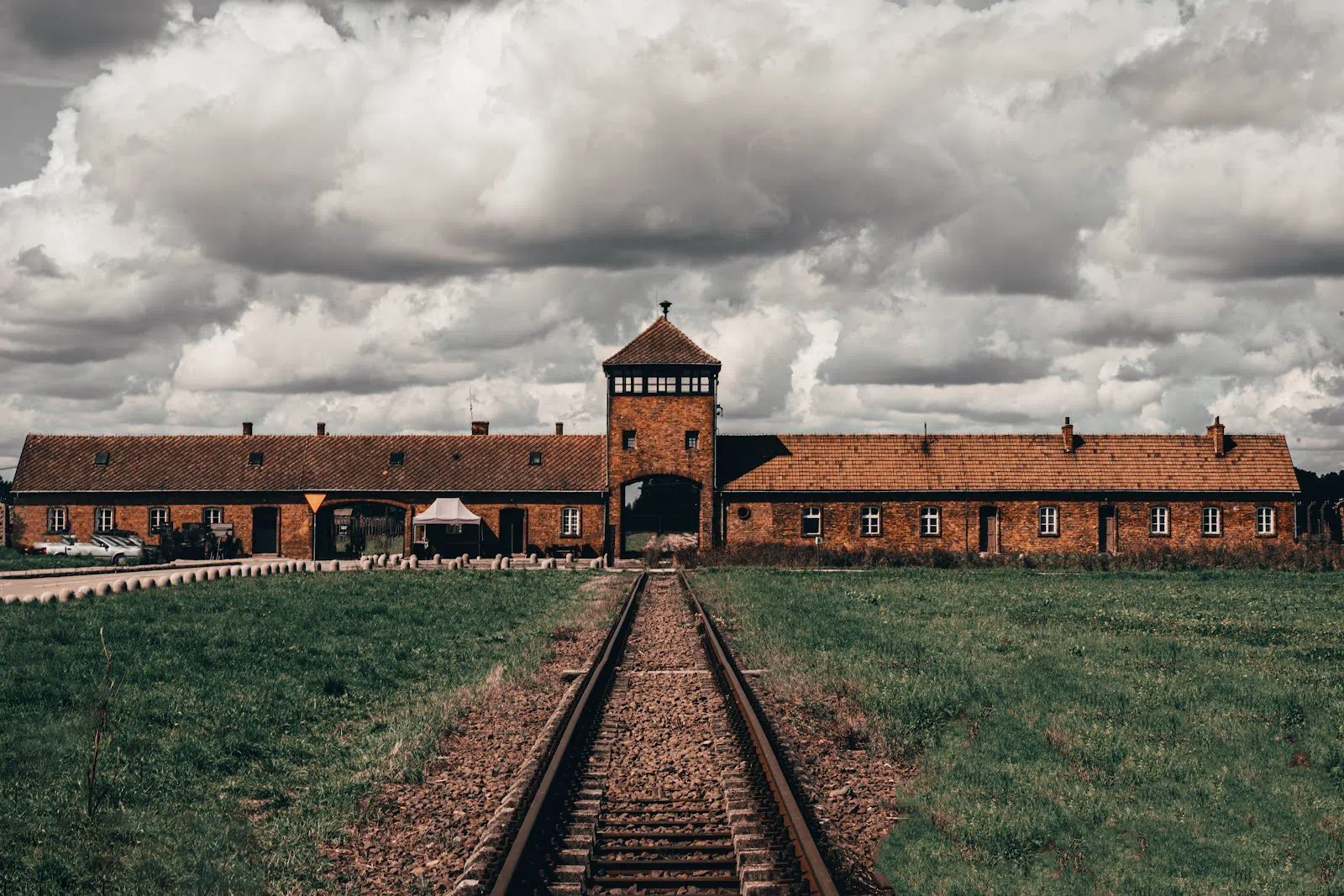
The site was established as a memorial by Poland's parliament in 1947, two years after liberation, and it has been administered as a museum ever since. Give it a whole day and put nothing social after it.
Down the salt mine
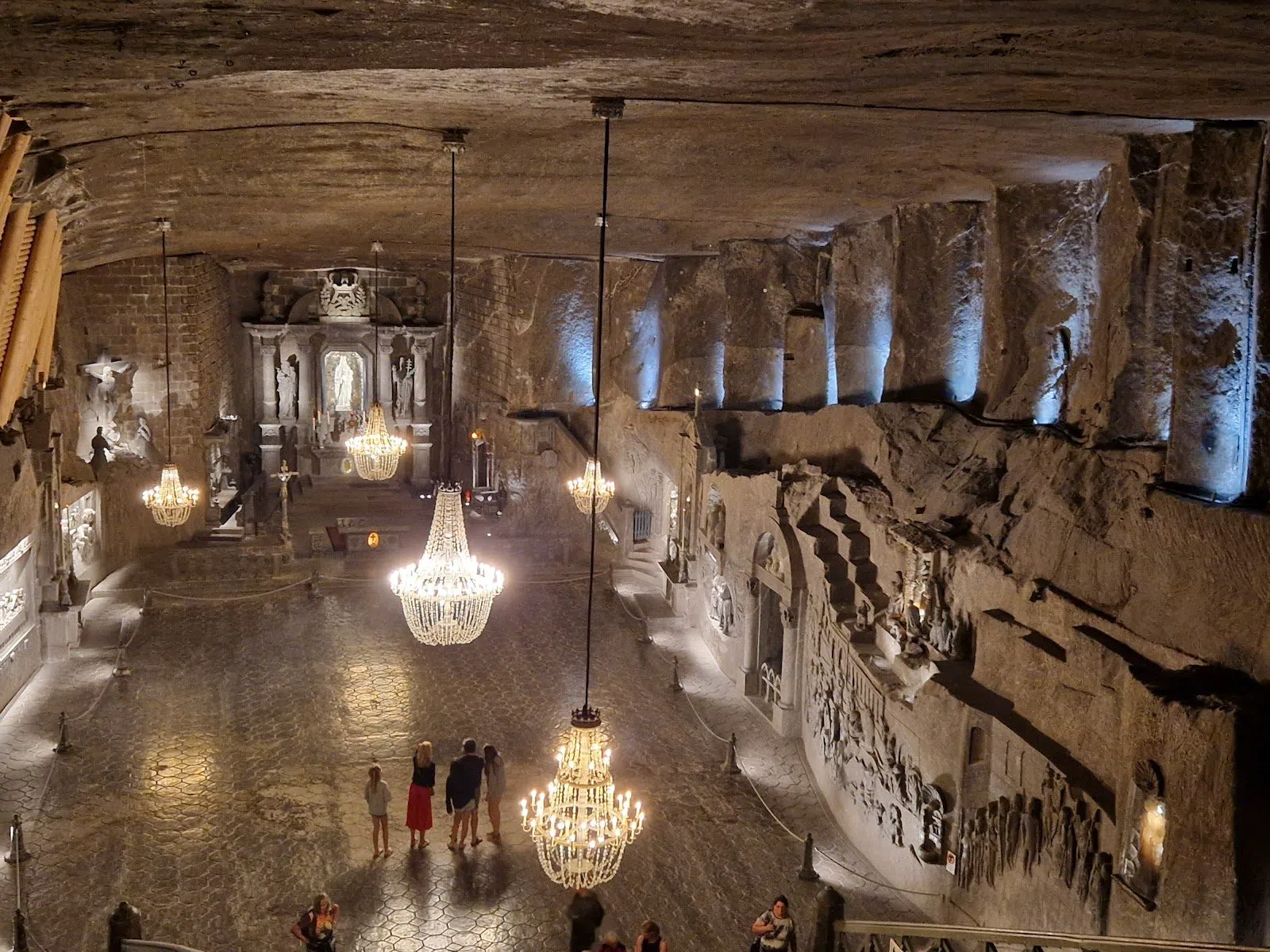
Wieliczka Salt Mine (southeast of the city, about half an hour by train or bus) holds a steady 17–18°C underground no matter what the weather is doing above, which makes it the one fixture in an October week that the sky cannot spoil. The Tourist Route starts from about 131 PLN per adult, English departures run at set times, and there is a dedicated organised-group booking route with its own price list. Everyone walks in a guided group regardless, so a private guide buys you nothing.
The physical side is real: 800 stairs and 3.5 km of walking over two to three hours, most of it descending. Salt has been worked here since the 13th century and the mine was inscribed on the first UNESCO World Heritage list in 1978. The chambers you walk through are the by-product of seven centuries of extraction, not a set built for visitors.
An afternoon in Nowa Huta
Crazy Guides have been running their Nowa Huta tours since 2004 and it remains the sanest way to see the district on a short grey day. Four guests per vintage car; larger parties are split across additional cars in convoy, so the tour is private by default. The price is 850 PLN for one guest, rising to 1,200 PLN for four, per car rather than per head, which means it only makes financial sense with three or four people. A couple will find it steep.
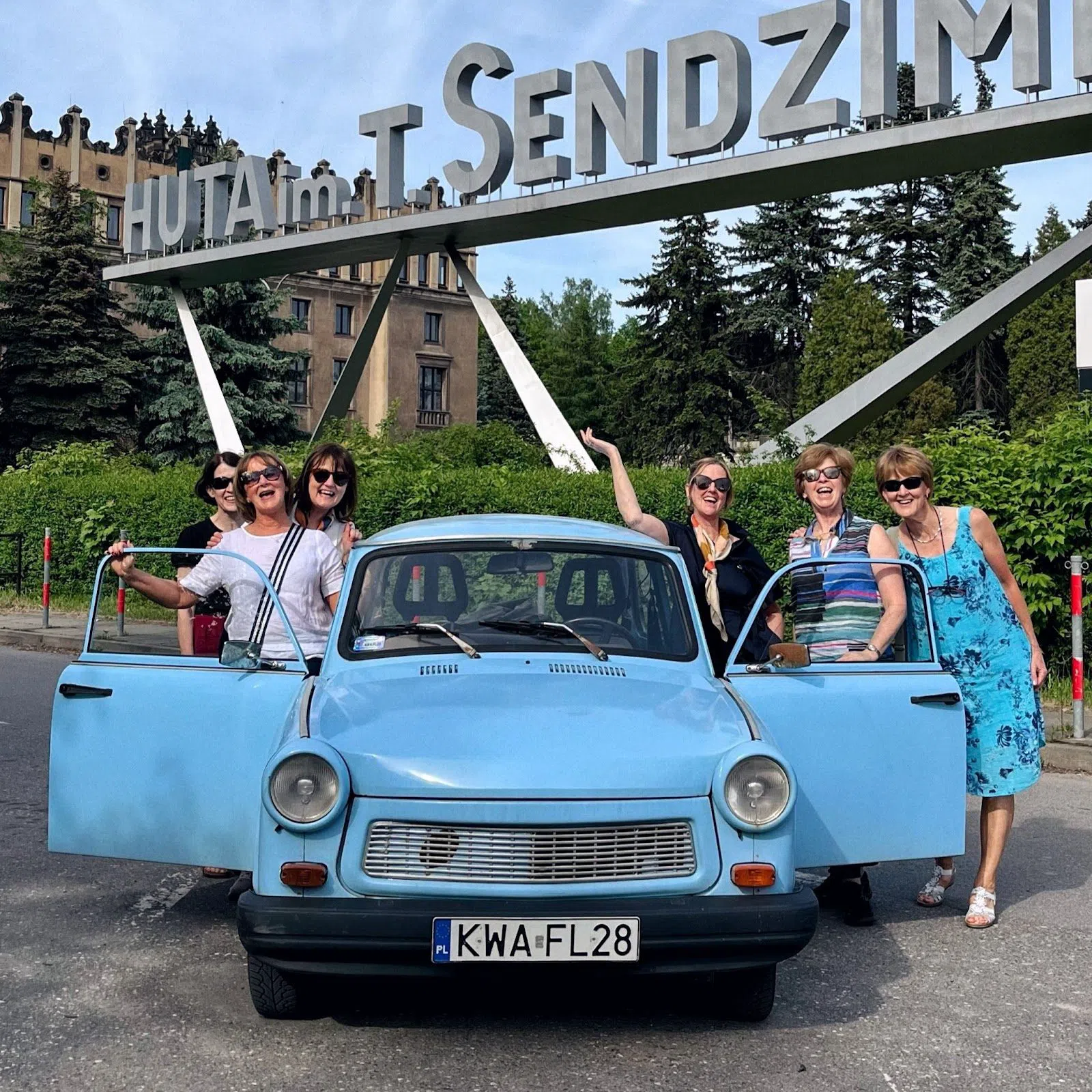
Nowa Huta was laid out from 1949 as a purpose-built steelworks town radiating from Plac Centralny, and its scale reads better from a moving car than on foot, particularly when the daylight is short.
Four nights at the Forum
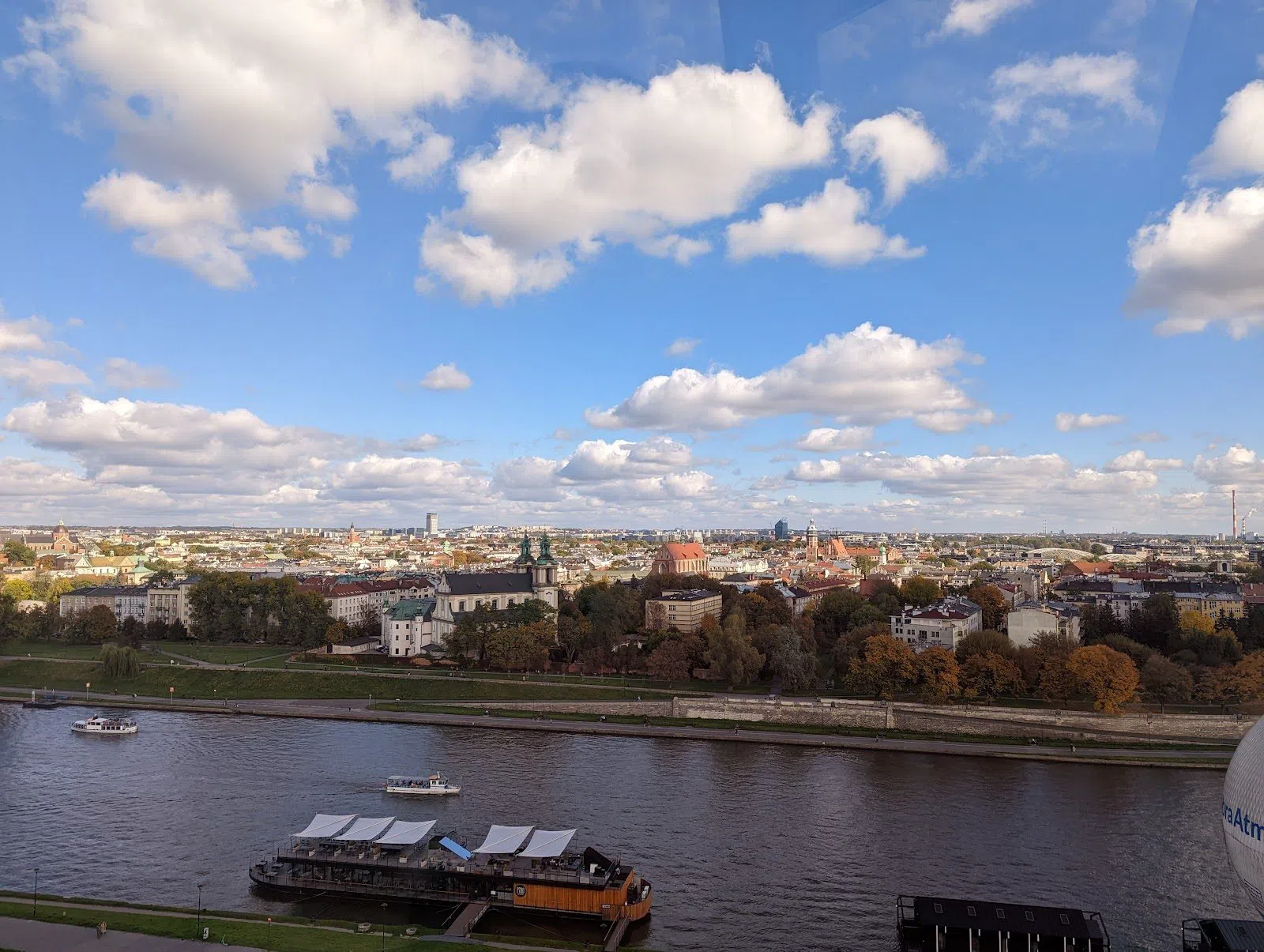
Unsound Festival at Hotel Forum (Podgórze, on the south bank of the Vistula) holds its Krakow chapter on 8–11 October 2026 under the theme 'Soft Power'. Individual tickets start at 70 PLN, with three-night Hotel Forum club passes sold for the run; multi-night passes cost more. It is an open-ticket event, so there is no door policy to negotiate and groups are fine.
Even if the music means nothing to you, the festival draws an international crowd and fills beds citywide. If your dates overlap, sort the room before anything else. Start with the Krakow hotel search and book well ahead of those dates rather than after. The Forum itself stopped taking hotel guests in the early 2000s and has worked as an event space since; it is the long concrete slab on the riverbank you keep noticing from the Wawel side.
Eating on Plac Nowy and after dark
Okrąglak on Plac Nowy (Kazimierz) is the rotunda in the middle of the square, and the zapiekanki come from hatches around its outside, Endzior among them, at 20–30 PLN each. There are no bookings and no door policy; you queue at a hatch and eat standing. What has changed matters in October: the interior has been reworked into the covered Jatka 2.0 food hall with stalls and seating, so a group now has somewhere indoors to sit down. The hatches still run late for the after-midnight queue.
The rotunda was built in 1900 as a kosher poultry slaughterhouse for the Jewish quarter it stands in, which is why it is round and why it sits dead centre of a square used as a market ever since.
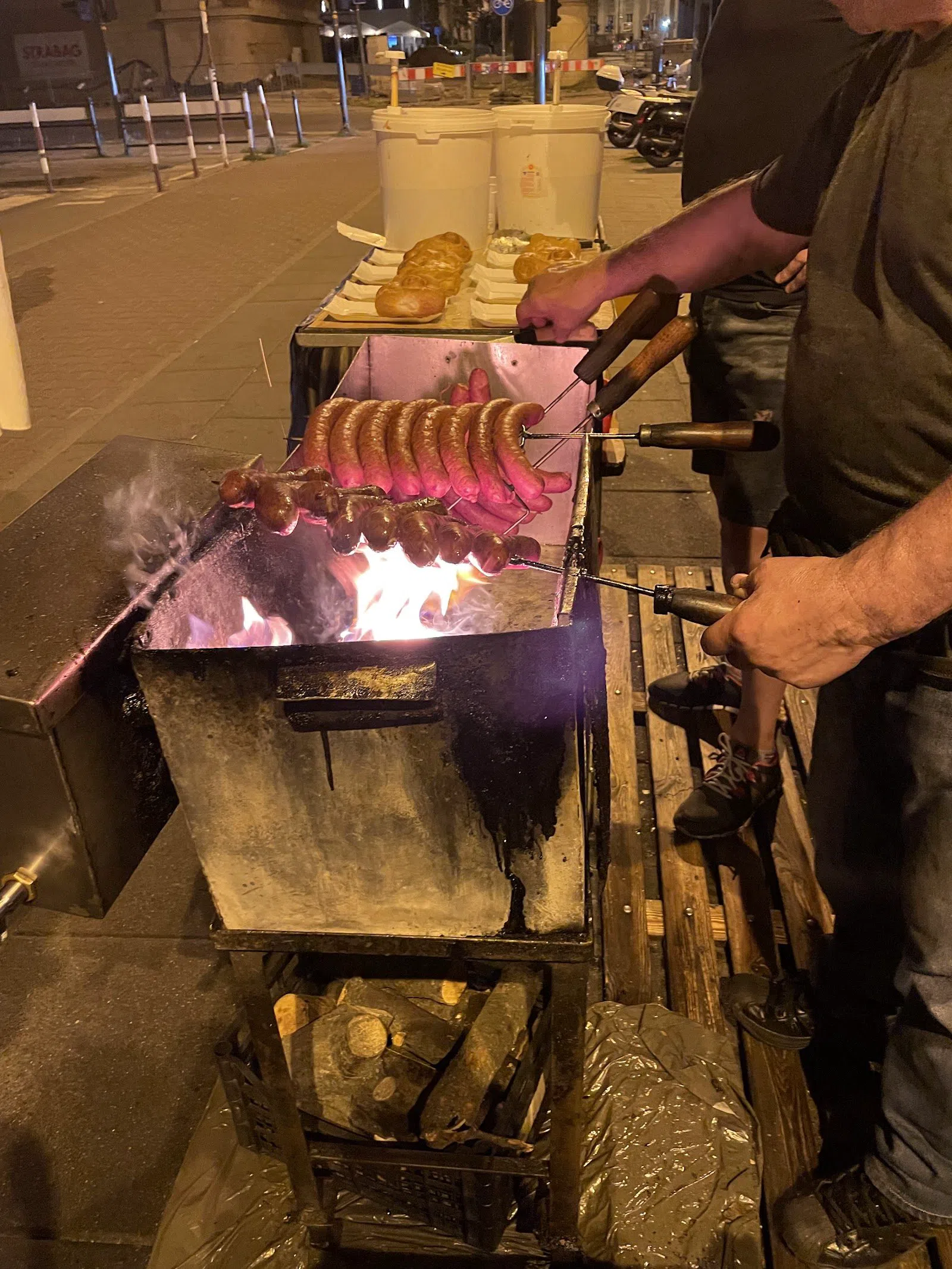
Kiełbaski z Niebieskiej Nyski (by the Hala Targowa market, east of the Old Town) is a blue van that has been grilling since 1991 and still parks nightly except on red-letter holidays. The sausage-and-bread set is 25 PLN. There is no seating, it is cash-friendly, and any size of group is fine as long as you accept the wait. The queue after dark is half the point, and October cold is the correct weather for it.
Tables worth booking
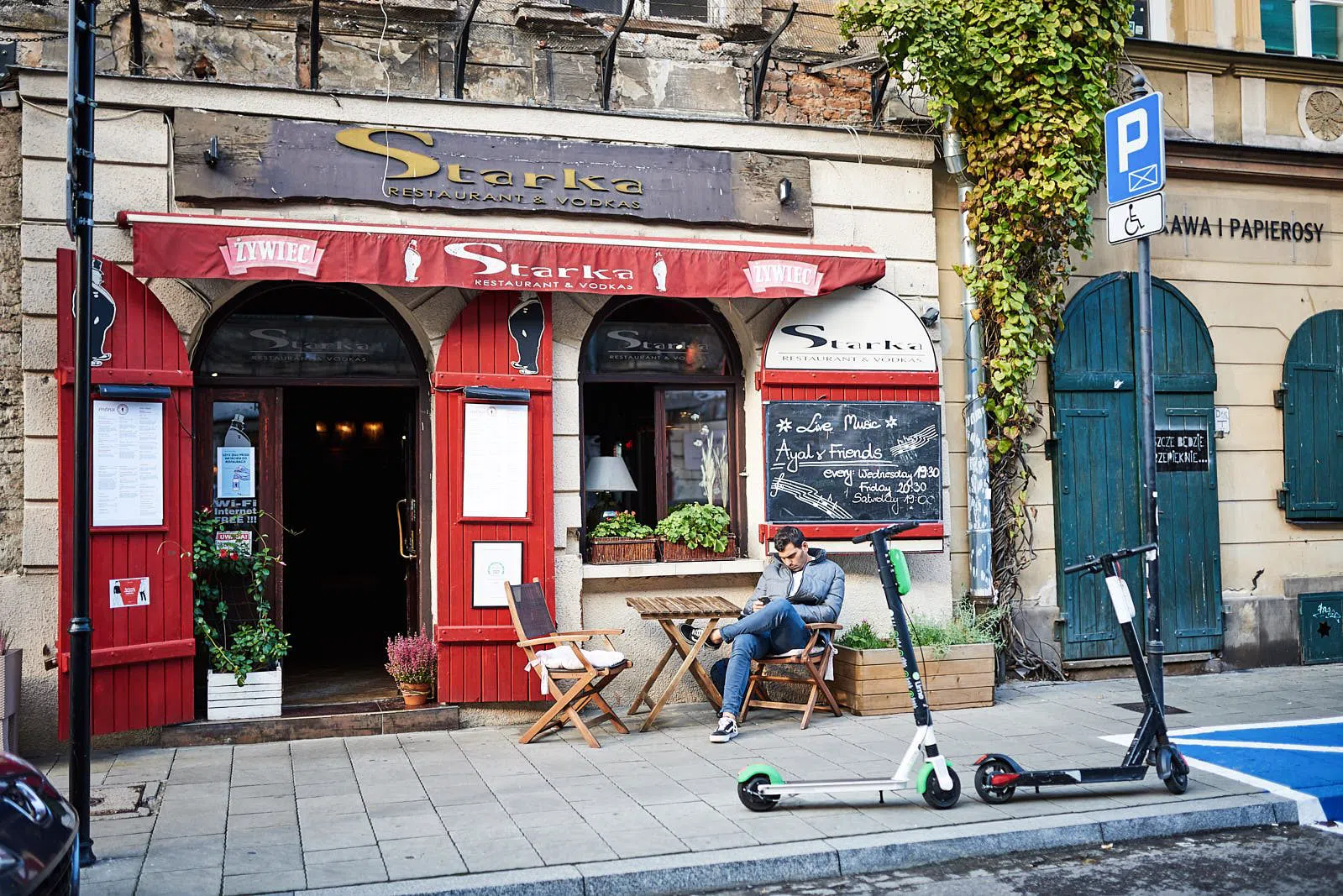
Starka Restaurant & Vodkas (Kazimierz) seats around 45 and takes reservations by phone. Mains run roughly 60–100 PLN, the slow-cooked Polish plates suit the weather, and there are acoustic sets on Wednesday and Friday evenings. It works for a group if you book, but it is not a banquet hall: eight is comfortable, twenty is not. The house infusions are the reason to come. Starka proper is rye vodka aged in oak, traditionally laid down at a child's birth and opened at their wedding, which is the tradition the list here belongs to.
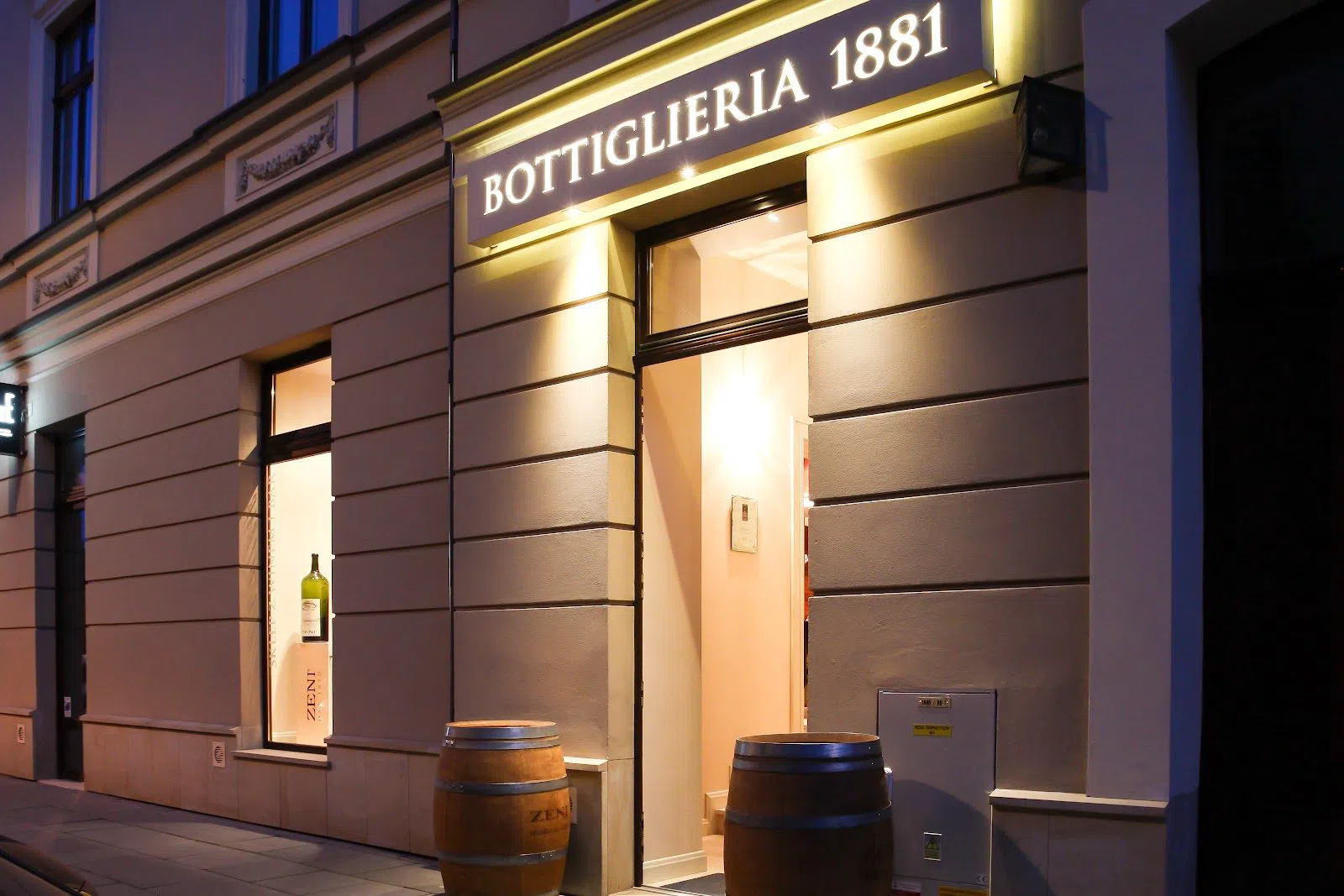
Bottiglieria 1881 (Kazimierz) holds two Michelin stars in the 2026 Poland guide and is the only Polish restaurant holding two. It serves dinner only, Tuesday to Saturday from 17:00, with a tasting menu at roughly 600–800 PLN per person and more with pairings. Bookings go through their own in-house reservation platform; the room is small and books out months ahead, and large groups need to contact the restaurant directly rather than trying their luck online.
Two rooms for the evening
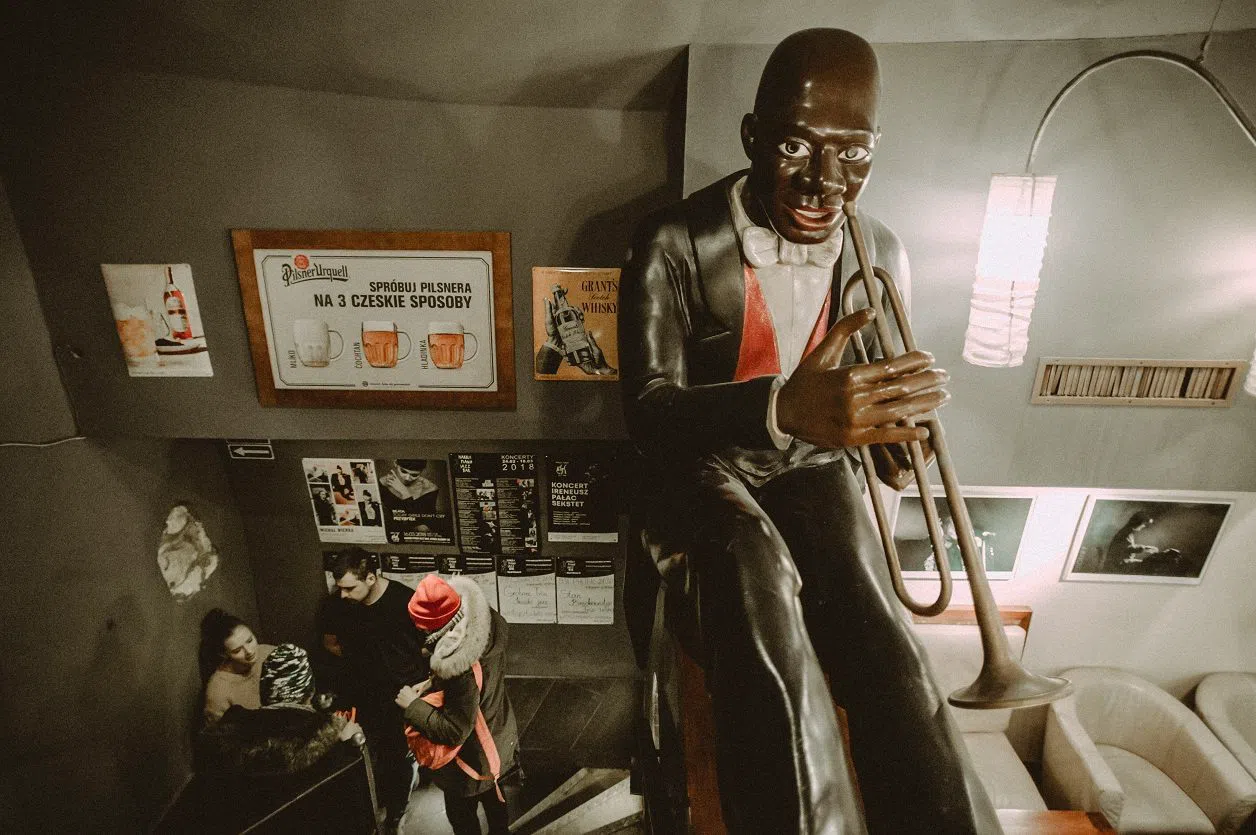
Harris Piano Jazz Bar (Main Market Square) has live music every single night rather than the odd weekend, which is what makes it dependable on a wet Tuesday when nothing else is scheduled. Entry runs from free to around 40 PLN depending on the night, plus drinks. Walking in early works; the cellar is tight, so a group should call ahead for a table before the set starts, and the free jam nights fill fastest of all. The Market Square cellars were ground floors once. The level of the square rose over centuries of paving and rebuilding until they sat below the pavement.
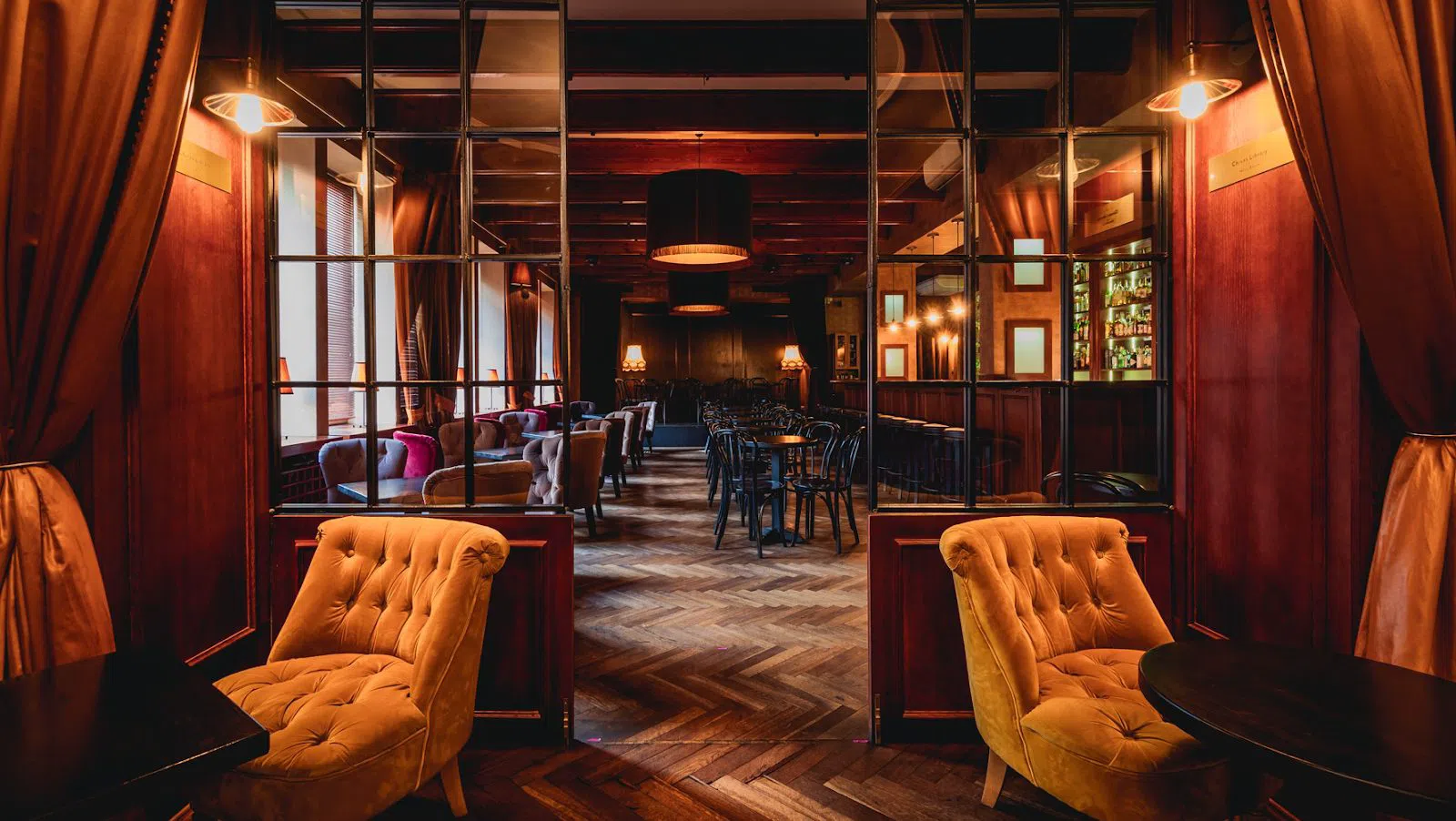
Mercy Brown (western edge of the Old Town) is small and reservation-led: email [email protected] or call ahead. It suits four to six people and not a large party, with cocktails roughly 45–65 PLN. There is no sign outside, so have the address before you go looking rather than circling the block. It is one of the originals of the Polish speakeasy wave and still carries a 50 Best Discovery listing.
The last night of the month
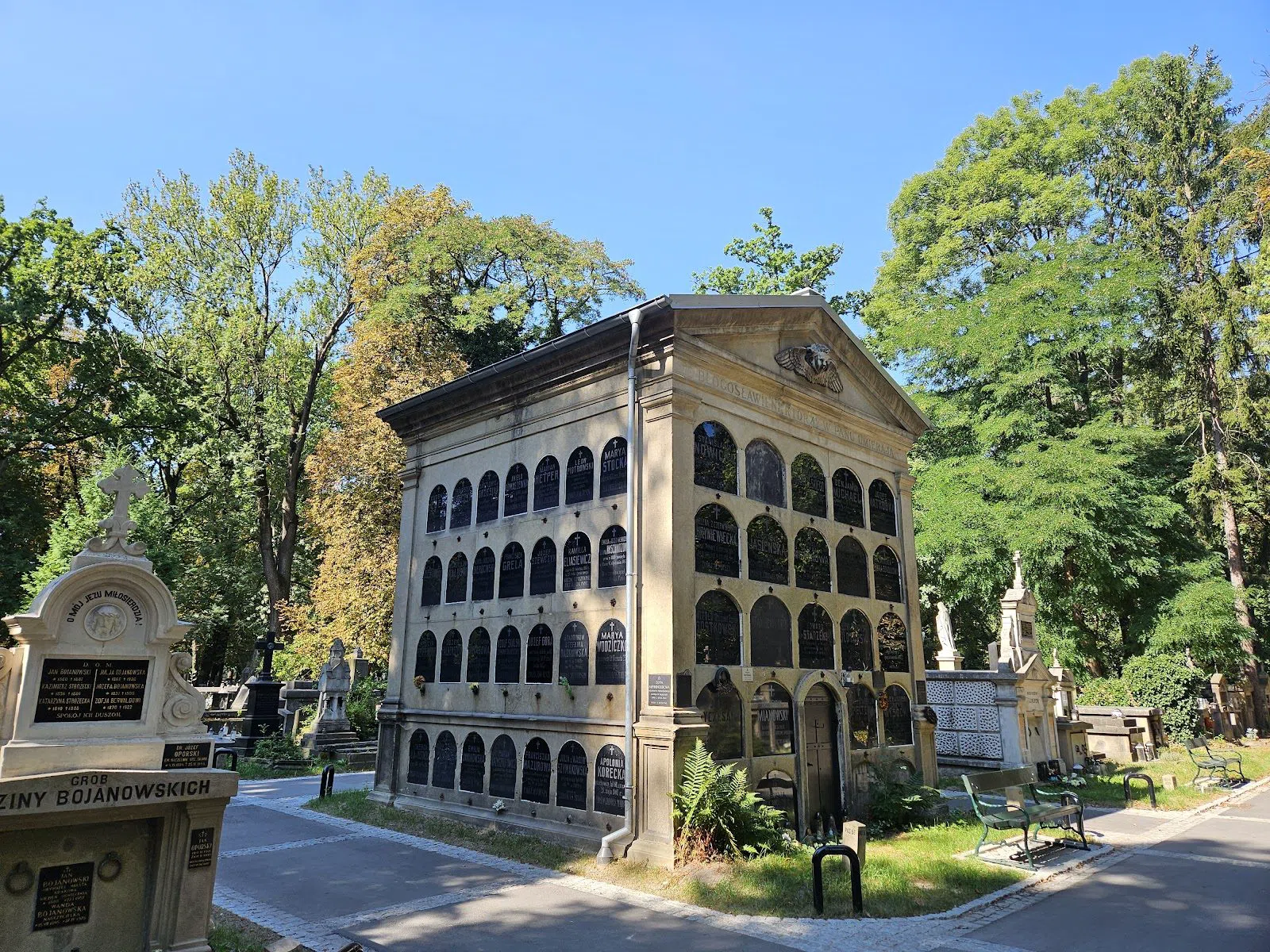
Rakowicki Cemetery (Rakowice, northeast of the centre) stays open 7:00–22:00 on 31 October as families arrive to light candles ahead of All Saints. It is free and open to all, extra tram and bus lines run, and driving anywhere near it is pointless. But this is a working cemetery on the most solemn night of the Polish year. Go quietly and in small numbers, not as a tour party, and do not photograph mourners. The cemetery opened in 1803, when burials were moved out of the built-up city, and the families tending graves there are often the fifth or sixth generation to do it.
Getting around, paying and what it costs
Transport. Trams and buses are dense and punctual; buy from the on-board machine, which takes cards, and validate immediately. A 24-hour pass pays for itself on the day you combine the mound with Zabłocie. The Old Town is walkable end to end in about fifteen minutes, so most days you will use transport twice. The airport train reaches the main station in around twenty minutes.
Money. Poland uses the złoty (PLN), not the euro. Cards work almost everywhere, including museum desks and the mound kiosk, but keep 50–100 PLN in cash for the van queue and the zapiekanka hatches.
Timing. Outdoor things in weeks one to three, indoor things after the clocks change on 25 October. Pre-book Rynek Underground, the Schindler factory, the salt mine, the memorial and Bottiglieria. The basilica tower cannot be pre-booked at all, so go early on your first clear morning.
Budget. A day with two museums, tram travel and a sit-down dinner lands around 250–350 PLN a head. On top: from 131 PLN for the salt mine, about 100 PLN for a guided memorial visit, 850–1,200 PLN per car for Nowa Huta, and 600–800 PLN for the tasting menu.
Rooms. The 8–11 October window is the only genuinely tight one in the month; everything else is straightforward. For districts, orientation and what sits where, the Krakow guide covers the ground before you pick an address.
Before you go
Is October a good month to visit Krakow?
It is the last month the city works outdoors, and the crowds are thinner than in summer, but there is a deadline. The Wawel Royal Gardens, the Viewing Tower and Dragon's Den, and the Bugle Tower climb at St Mary's Basilica all run only to 31 October, then close until spring. Go in the first three weeks if those matter to you.
What is the weather like in Krakow in October, and when do the clocks change?
Daytime highs are around 13 to 14°C at the start of the month and single figures by the end, with nights a few degrees above freezing and rain that comes in showers rather than settling in. The clocks go back on Sunday 25 October 2026, moving sunset from roughly 18:20 at the start of the month to about 16:20 in the final week.
Do I need to book Auschwitz-Birkenau in advance?
Yes, in practice. In October the site opens 7:30 to 18:30, but until 31 October the 10:00 to 15:00 window admits only guided visitors or organised-group passes, so an unguided visit means arriving before 10:00 or after 15:00. A self-guided entry card is free; a guided tour with a Museum-licensed educator and headset is roughly 100 PLN. Guided slots open up to five days ahead.
Can I book the St Mary's Bugle Tower climb online?
No. Tickets are same-day only from the visitors' desk on Mariacki Square, with a maximum of 15 people per entry and two groups per hour, at 20 PLN or 15 PLN reduced. Get there when the desk opens. The tower closes from November to April, so October is the last month to climb it.
What works on a wet October afternoon in Krakow?
Rynek Underground beneath the Main Market Square (45 PLN standard, timed slots that sell out, closed on Monday 12 October 2026), the Schindler factory museum in Zabłocie (60 PLN, pre-booking required), Wieliczka Salt Mine, a steady 17 to 18°C underground, and Harris Piano Jazz Bar on the square, which has live music every night.